Event 1
Bombing of the Singleton house
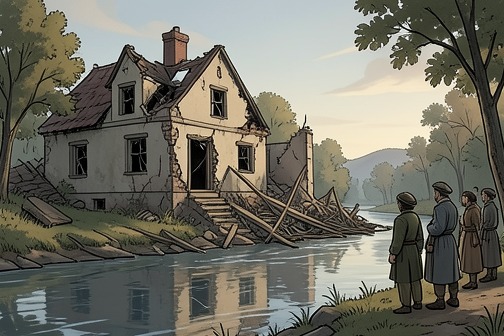
The bombing of the Singleton house shatters a dinner party in [South Oxford](entity:location-recall-location-south-oxford-075a90726b33), exposing the gulf between what witnesses see and what the authorities will say happened. Its immediate aftermath is a physical ruin beside the river; its political aftermath is an official gas-leak story and a senior official’s anger that a covert operation has become impossible to contain quietly.
## Causes and Background
The explosion arrives during an already awkward evening. The Trophy Wife has come early, [Sarah Trafford](entity:character-recall-character-sarah-trafford-821a08498ae2) is preoccupied with a kitchen crisis, and [Mark Trafford](entity:character-recall-character-mark-trafford-85ced97005d3) is left pouring drinks and drawing out information. [Gerard Inchon](entity:character-recall-character-gerard-inchon-6b5fcb646765) is forty-five minutes late. [Wigwam](entity:character-recall-character-wigwam-86bed3b11c33) arrives without [Rufus](entity:character-recall-character-rufus-46e67b5a0ca5), whose plans, as usual, remain vague. The dinner-party small talk has not found its footing when Sarah Trafford says she will make coffee. The ordinary, slightly comic social scene gives way abruptly to an event no one present can explain.
The blast comes from a house several hundred yards up the road, perhaps as far as the river. Gerard Inchon identifies it as a bomb, distinguishing it from a gas explosion. Later discussion confirms that the incident belongs to a covert operation: C accuses [Howard](entity:character-recall-character-howard-b9b5ae3ec646) of having started a war without permission and asks which of the Crane brothers masterminded the operation. The available account does not identify the bomber or settle which brother was responsible. It does, however, establish that the gas-leak explanation is not the truth behind the explosion.
## The Explosion and Immediate Response
The event reaches the dinner party in uncertain stages. The room shakes—not violently, but enough to rattle the framed prints and set the light fitting spiralling, its shadows swinging across the walls. A dull thump and a sliding noise follow, or may have preceded the shaking; Sarah Trafford later cannot remember their order. That uncertainty is part of the scene’s shock: sensation is vivid, but sequence has already begun to break apart.
Gerard Inchon sets down his glass, looks toward the curtained window as though a suspicion has been confirmed, and tells the others it was a bomb. Rufus brushes past him toward the front door. After a moment of indecision, the guests follow. Sarah Trafford registers events with an off-kilter clarity in which perception is heightened and time seems slowed, while words fail her. Only afterwards does she imagine Gerard Inchon’s expression at being upstaged by Rufus; at the time, the group’s attention is fixed on the blast.
Outside, black smoke clouds the night, but there is little visible flame. A crowd has gathered beneath the streetlights, and a muted roar continues to echo from the houses. Sarah Trafford tastes blood after biting her lip and is divided between wanting to understand what has happened and not wanting to know. Rufus stands apart from the others, a few yards nearer the destroyed house. Beneath the roar, the crowd’s murmuring carries an unsettling note of appreciation. A glow shows in an upper window, but Rufus offers the gas-main explanation even as Gerard Inchon has already named a bomb.
## The Ruined House
The following morning, Sarah Trafford sees the damage from the pedestrian bridge at Friars Wharf, a familiar shortcut over the [Old Lag River](entity:location-recall-location-old-lag-river-4ecc0b3fd10c). The house is an end-of-terrace building beside the riverside footpath. It has folded inward, leaving its interior exposed to passers-by and to women returning from taking their children to school. The second storey is gone; the ground floor is reduced to smashed furniture and broken walls. A red front door remains upright, an incongruously jaunty fragment at the edge of the destruction.
The blast has made absence visible in the surviving surfaces. Scorched, shrivelled wallpaper bears the shadow of a chair that has been reduced to matchwood. The remnant of the roof sags and continues to shed tiles. Yellow cordons close the footpath and the road-end by the river, while police in dayglo overalls gather on the bank. Women nearby smoke and claim to have witnessed the explosion; one tells Sarah Trafford that three people were carried out on stretchers. The report is presented as a bystander’s account, not as confirmation of who those people were or what became of them. With much of the house gone, its neighbour now seems closest to the river: South Oxford has, in the narrator’s stark phrasing, lost an address.
## Cover Story and Consequences
The damage is followed by an effort to control its meaning. Howard assures C that the locals have been pacified and repeats that the incident was a gas leak, adding that the story will hold. His account turns concealment into administrative routine: the false explanation is not merely a public suggestion but the version being maintained for the neighbourhood and the press. C’s response makes clear that the operation has produced a politically dangerous result. He rebukes Howard for the failure and warns that the death of a child in a botched covert operation could attract sustained scrutiny.
The child at the centre of C’s concern is reported to be fine. C asks whether either Crane brother had shot her, and Howard says she is safe; the exchange establishes her survival without explaining her precise circumstances. C’s reference to the possibility of documentaries about dead babies contrasts the intimate stakes of the child’s life with the machinery of public scandal and official responsibility. The conversation also leaves a question open: C demands to know which brother planned the operation and what might follow, but no answer is supplied in this scene.
## Narrative Significance
The bombing’s force lies partly in the collision between domestic scale and covert violence. A dinner party is interrupted by an explosion that is close enough to rattle its light fitting, yet the devastated house remains separated from the guests by several hundred yards and, at first, by uncertainty. The next morning, the exposed rooms, the chair-shaped scorch mark, and the roof still dropping tiles make that distance impossible to treat as safety.
The contrast between Gerard Inchon’s recognition of a bomb, Rufus’s gas-main explanation, and Howard’s repeated official gas-leak story traces the transformation of an event into a cover story. The physical evidence remains visible even as the account is managed. The bombing therefore marks both a literal destruction and a break in the apparent normality of South Oxford: the party cannot resume its previous meaning, and the ruined house cannot be made whole by the explanation offered for it.
Event 2
Dinah Singleton's disappearance from the hospital
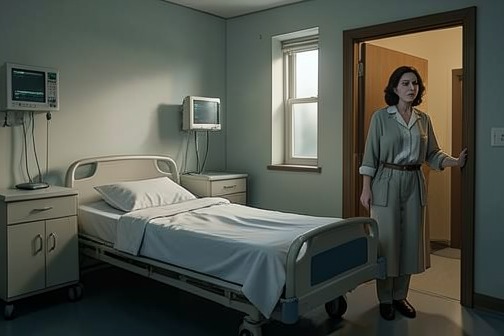
[Dinah Singleton's disappearance from the hospital](entity:event-recall-event-bbc73cf2f26d) turns a child’s unexplained absence into the hinge of a covert pursuit. [Dinah](entity:character-recall-character-dinah-b8a1923e6610) had been brought in after an explosion, but when [Sarah Trafford](entity:character-recall-character-sarah-trafford-821a08498ae2) asks to see her, the hospital cannot—or will not—provide access, and ultimately confirms that she is no longer there. The gap between a meticulously recorded admission and an unrecorded departure makes the disappearance feel less like an ordinary transfer than a fact being withheld; later, the child’s possession is explicitly discussed as a way to draw [Michael Downey](entity:character-recall-character-michael-downey-0fa523b266d3) out.
## Background and Stakes
The immediate context is an explosion that has left Dinah in hospital. The event is already surrounded by competing stories: while international attention turns to the Gulf crisis and renewed allegations concerning missing Iraqi soldiers, Sarah sees the local deaths and the child as the matter that demands her attention. She goes to Reception seeking Dinah, though she does not know which ward holds her. She identifies Dinah as the little girl brought in after the explosion and asks to speak with her.
The hospital visit is not a routine inquiry for Sarah. Dinah’s survival resonates with Sarah’s own experience of having come through a fire, and Sarah wants to know not only whether the child survived but whether she will remain safe. She has not told [Mark Trafford](entity:character-recall-character-mark-trafford-85ced97005d3) she is making the visit and gives her maiden name at Reception, an unusual precaution for her. Her concern therefore precedes any proof of what happened to Dinah: she is drawn into the search by the child’s vulnerability and by the sense that survival alone cannot settle the question.
## The Hospital Search
At Reception, a harried woman manages three telephones and a short queue as Sarah tries to make her request heard. Asked whether she is related to Dinah, Sarah describes herself first as a neighbour and then as a friend. The qualification marks the distance between her and the child in official terms, even as Sarah’s concern exceeds what that formal relationship might suggest.
A small, middle-aged woman in a white smock then takes control of the inquiry. She addresses Sarah as Ms Tucker and refuses to let her see Dinah. When Sarah asks whether the child is all right, the woman says she has no information about the patient. Only after further questioning does she reveal the crucial fact: Dinah is no longer in the hospital. The statement confirms an absence but explains nothing. Sarah cannot tell whether Dinah was transferred or discharged, and the possibility of abduction enters her questioning without being confirmed.
The exchange makes authority itself part of the obstruction. The woman insists that she is in charge and that all enquiries will be handled by her; her control of the conversation does not produce an account of Dinah’s whereabouts. In a separate confrontation, a man recognizes that Sarah is there for Dinah and asks where the child is. Sarah, angry and unwilling to engage, demands her car instead. The question establishes that Dinah’s absence is known beyond the hospital encounter, while still supplying no answer about what became of her.
## Records and the Unexplained Absence
The hospital’s records sharpen the contradiction. A later inquiry finds that Dinah was checked in at 2:37 a.m. on the fourth. The person investigating Sarah’s question cannot find Dinah, and reports no further information. The precise admission time makes the blank that follows more conspicuous: the institution records ordinary details with great care, yet a child has disappeared in the middle of the night without anyone the investigator spoke to knowing where she went.
That absence is not presented as proof that no record exists. The investigator distinguishes between nobody encountered knowing Dinah’s destination and the possibility that the information is restricted. Sarah recognizes the implication and asks whether the restricted records can be accessed. The answer is that it would not be easy. The search thus moves from an apparent failure of hospital knowledge toward the prospect of deliberate concealment, without revealing the record or the person who authorized Dinah’s removal.
## Concealment and Strategic Use
The disappearance sits alongside an official effort to control the public account of the explosion. [Howard](entity:character-recall-character-howard-b9b5ae3ec646) repeats that the story will be a gas leak and says it will hold. When C asks about the child and whether Crane has had her shot, Howard replies that she is fine. The exchange gives the child’s safety immediate stakes inside the operation, while showing that officials are discussing her condition in the same breath as the story intended to suppress scrutiny of the blast.
The strategic purpose of keeping Dinah becomes clearer when [Amos Crane](entity:character-recall-character-amos-crane-eb066a3a7112) explains that Michael Downey will come looking if they have the child. In this calculation, Dinah is not merely missing: her whereabouts can be used to constrain Downey’s choices and lure him toward those holding her. The evidence establishes the intended leverage, but not the precise chain of custody from hospital to captors. That unresolved interval matters. The hospital’s admission record fixes when Dinah entered its care; its staff cannot account for her departure; and the later security discussion makes clear why her absence may have been engineered rather than accidental.
The episode therefore changes the meaning of Sarah’s search. What begins as a neighbour’s attempt to learn whether an injured child is safe opens onto a contest between personal concern and institutional secrecy. Dinah’s disappearance is at once a missing-person mystery, a failure of accountable record-keeping, and a tactical act in the effort to bring Michael Downey within reach. The child’s fate remains the central uncertainty, but the use to which her absence is put is no longer uncertain: someone expects Downey to choose her over his own freedom of action.
Event 3
Military helicopter crash near Cyprus

The [Military helicopter crash near Cyprus](entity:event-recall-event-e98da70a7b6c) is the reported death of [Thomas Singleton](entity:character-recall-character-thomas-singleton-76bcf0e013bf), a soldier whose loss left his wife a widow before their daughter [Dinah Singleton](entity:character-recall-character-dinah-singleton-3fb6eb701a31) was born. At first it appears to be a distant military tragedy, relayed as settled local knowledge. [Joe Silvermann](entity:character-recall-character-joe-silvermann-41587a2ef7a0)’s account complicates that certainty: no body was recovered, and a policeman who disclosed details soon urged [Joe](entity:character-recall-character-joe-9b197d8c56ff) to forget the conversation. The crash matters not only as a family bereavement but as the point where an official death story meets evidence of deliberate silence.
## Reported Circumstances
[Wigwam](entity:character-recall-character-wigwam-86bed3b11c33) first explains the Singleton family to [Sarah Trafford](entity:character-recall-character-sarah-trafford-821a08498ae2) by saying that [Dinah](entity:character-recall-character-dinah-b8a1923e6610)’s husband—meaning Dinah’s father, Thomas Singleton—had been killed several years earlier. Her account is casual and uncertain in its particulars. Thomas had been a soldier who fought in the [Gulf War](entity:event-recall-event-1c869af0ded6), but Wigwam distinguishes the crash from that conflict: he died in an accident involving a helicopter, perhaps in [Cyprus](entity:location-recall-location-8d3eacb72dda). She remembers that several soldiers were killed and that the event occurred four years earlier, before Dinah was born. The family had moved to [South Oxford](entity:location-recall-location-south-oxford-075a90726b33) afterward, so Wigwam had not known Thomas personally; her knowledge is second-hand rather than eyewitness testimony.
Joe Silvermann later supplies a more specific version while discussing Thomas with Sarah. He identifies him as a soldier who fought in the Gulf War, then places his reported death off Cyprus in a helicopter crash about four years before the conversation. Joe says that six people died altogether among the soldiers aboard, in addition to the crew. His estimate gives the incident a larger scale than Wigwam’s brief account, while retaining the same central details: the military setting, the location near Cyprus, and the separation between the crash and the Gulf War itself.
## The Missing Body and the Unsettled Death
The decisive complication is that the helicopter’s occupants were reportedly killed, but Thomas’s body was never recovered. Joe emphasizes this absence in response to Sarah’s question about how Thomas died the first time. He treats the missing body as more than an incidental detail: it gives force to his dry observation that reports of Thomas’s first death had been greatly exaggerated. The wording makes the official account sound less final than the neighborhood version Sarah had heard.
Sarah recognizes the implication without being given a complete explanation. Her answer connects the missing body to the possibility that its recovery would have been embarrassing in retrospect. The exchange does not establish what happened to Thomas after the crash, nor does it explain how or why the original report was made. It does, however, change the status of the story: what Wigwam had passed on as a husband killed in service becomes a reported death whose central physical confirmation is absent. The distinction between a person presumed dead and a body actually recovered is left conspicuous.
## Inquiry and Information Clampdown
Joe’s information comes through a policeman, not through a public report. He says that the officer spoke in exchange for a donation to a charity of the officer’s choice, then warned Joe that the information was for his ears only. Two hours after their conversation, the policeman telephoned again and suggested that Joe forget they had ever met; he even offered to return the donation. Joe describes that reversal as unprecedented and nearly supernatural, stressing how sharply the officer’s conduct changed after disclosing the crash details.
The policeman could not explain the reason for the pressure. He did, however, describe an information clampdown and warned that leaks would be plugged. His concern was his pension. Joe consequently tells Sarah not to expect the details to appear in newspapers. The reported crash is thus surrounded by two kinds of uncertainty: the missing body weakens the apparent finality of Thomas’s death, while the sudden effort to suppress discussion obstructs independent scrutiny. The account identifies no authority responsible for the clampdown and gives no further explanation of its purpose; its significance lies in the warning itself and in the speed with which the policeman tried to retract what he had disclosed.
## Family Loss and Narrative Significance
For the Singleton family, the crash’s public meaning is clear even where its circumstances are not. Thomas is treated as a soldier killed several years earlier; his death precedes Dinah’s birth, and [Maddie Singleton](entity:character-recall-character-maddie-singleton-6a00cba912e4) is left to raise their daughter without him. Wigwam’s description makes the loss part of the family’s ordinary history, while her uncertainty about the precise location and details shows how little of the event has reached the people around them. Sarah’s questions, by contrast, expose how an apparently familiar account depends on fragments of hearsay.
The event also marks a divide between private mourning and official knowledge. The family receives a settled conclusion, but Joe encounters a missing body, a guarded policeman, and a warning that the information should not be repeated. These details do not by themselves prove what happened to Thomas; they make the accepted account difficult to treat as complete. By placing the revelation inside Joe and Sarah’s conversation rather than presenting the crash directly, the narrative lets its meaning emerge through gaps, corrections, and the attempted suppression of the story. The crash is therefore both a reported military disaster and the beginning of a question about whether the reported death can be trusted.
Event 4
Gulf War
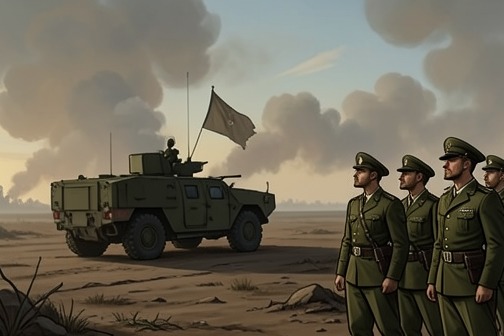
The [Gulf War](entity:event-recall-event-1c869af0ded6) is significant less as a continuous battlefield narrative than as a conflict whose public justifications and concealed consequences shape the novel’s present. It is invoked first as the prospect of a large military undertaking, then recalled through the service and experiences of soldiers whose histories have been obscured. The gap between confident public rhetoric and hidden violence gives the war its enduring force in the story.
## Public Rationale and Political Stakes
The rhetoric surrounding the impending conflict is dismissive of the opposing force: one speaker describes its conscripts as poorly equipped and treats victory by Western armies as a foregone conclusion. When asked what would happen if the Western side lost, he refuses to treat defeat as a real possibility, while [Wigwam](entity:character-recall-character-wigwam-86bed3b11c33) counters that nobody could win a nuclear war. The exchange sets assured predictions of military superiority against a warning about the scale of destruction that modern weapons make possible.
The war is also presented as an opportunity with consequences beyond the battlefield. Its anticipated coverage is described as a means of exciting public attention, while the contracts and employment associated with military procurement promise substantial financial rewards. Later, C tells [Howard](entity:character-recall-character-howard-b9b5ae3ec646) that the country is prepared to take up arms to stop [Michael Downey](entity:character-recall-character-michael-downey-0fa523b266d3) from speaking publicly, making the prospect of war part of the pressure surrounding the government’s attempt to contain him. The conflict therefore appears both as a public cause capable of commanding national attention and as a political setting in which disclosure is treated as a threat.
## Soldiers, Casualties, and the Official Record
The war enters the lives of [Sarah Trafford and Wigwam](entity:relation-recall-relation-sarah-trafford-and-w-f30fdd214690) through the history of [Maddy Singleton](entity:character-recall-character-maddy-singleton-8b9fd5335c1c)’s husband, [Thomas Singleton](entity:character-recall-character-thomas-singleton-76bcf0e013bf). Wigwam reports that he fought in the Gulf War, but distinguishes that service from the circumstances in which he was said to have died: several years later, he was reportedly killed in a helicopter crash near [Cyprus](entity:location-recall-location-8d3eacb72dda). In the account passed to Sarah, the crash killed six soldiers as well as members of the crew. The timing matters to [Dinah Singleton](entity:character-recall-character-dinah-singleton-3fb6eb701a31)’s story: she was only four, and had not yet been born when the soldiers died.
The report is shadowed by what it cannot establish. Thomas’s body was never recovered, a fact Sarah treats as making the official story embarrassing in retrospect. The information reaches her through a policeman who spoke to an intermediary in return for a charitable donation; soon afterward, he urged that the conversation be forgotten and offered the money back. The abrupt retreat makes an apparently settled military casualty report feel less like a closed account than a guarded one, while the absence of a body leaves the reported death unresolved.
## Combat, Prisoners, and the Concealment of Responsibility
The war’s concealed history is most sharply exposed in [Amos Crane](entity:character-recall-character-amos-crane-eb066a3a7112)’s recollection of Michael Downey and [Tommy Singleton](entity:character-recall-character-tommy-singleton-57d477aea743) at Crows’ Hill, a camp for Iraqi prisoners where the two served as guards for three months near the end of the Gulf War. Singleton is remembered as the better soldier, but the account does not make military discipline a safeguard against atrocity. A group of prisoners had been captured at an Iraqi military compound where a torture chamber was discovered: electric batons, chains hanging from the ceiling, and a blood-streaked bathtub, though no bodies were found. Some argued that the missing bodies meant nothing because the victims had been buried. The uncertainty did not prevent violence from following.
One night, Singleton, Downey, and several others took three prisoners to the wire and shot them. Crane does not know, or care, whether the men were drunk or high; his account emphasizes that the killing was a choice made amid unresolved evidence and wartime impunity. The soldiers themselves could have been shot for it. Instead, because the war was popular and no one wanted to disrupt its public celebration, the affair was covered up. Singleton’s group was removed from Crows’ Hill and held in close confinement for the rest of the war. Afterward, the army struggled to decide what to do with them; they remained a potential scandal for years before being absorbed into special services and, later, placed in the hands of [The Department](entity:organization-recall-organization-the-department-80599272ebf9). Their official deaths provided a blunt but useful cover story, erasing the soldiers as well as the record of what they had done.
Another account of the fighting brings the human cost into a different, immediate frame. Downey recalls trying with another soldier to speak to boy soldiers who knew almost no English beyond the word cigarette. Tommy Singleton had shot one of the boys; the soldiers bandaged his badly injured leg, but the treatment made no difference. Then a helicopter opened fire. They had, Downey says, expected it, yet the episode left him describing the boys not as real soldiers but as children. The sequence—an attempt to communicate, a wound that cannot be repaired, and fire from above—makes the distance between military labels and the people subjected to violence difficult to sustain.
Much later, Howard uses the prisoner killings to condemn Downey, telling [Sarah Trafford](entity:character-recall-character-sarah-trafford-821a08498ae2) that her friend had shot unarmed prisoners and was no better than a war criminal. The accusation is not a denial of the killing; it is deployed alongside a defense of the government’s own actions. Howard insists that Downey volunteered to be used as a guinea pig, and attributes the danger on the island to Downey going haywire rather than to the officials who wanted to bring him back into the fold. The war’s buried violence thus returns as an argument over responsibility: Downey’s past is real, but so is the state’s effort to exploit, contain, and disavow him.
## The War as an Unfinished Record
The Gulf War persists in the novel less as a battlefield chronology than as a record repeatedly revised by those who need it to mean something different. Public confidence makes defeat unthinkable; military accounts turn missing bodies and suppressed killings into manageable official stories; later, the same buried history becomes a weapon in disputes over Downey’s credibility and the government’s responsibility. These versions do not cancel one another: the soldiers’ violence remains real, but so does the machinery that conceals it and later invokes it selectively. The war’s afterlife is therefore a struggle over who may be named, believed, or held accountable—a conflict that continues long after the fighting has ended.
Event 5
The bombing of the Singleton residence
[The bombing of the Singleton residence](entity:event-recall-event-singleton-8e054f84b245) is both a visible rupture in ordinary life and the botched opening move of a covert operation against [Michael Downey and Thomas Singleton](entity:relation-recall-relation-michael-downey-and-t-92e6510e9ec0). Its immediate aftermath is rendered as a physical disaster in [South Oxford](entity:location-recall-location-south-oxford-075a90726b33); its later explanation reveals that the apparent accident was an attempted assassination whose consequences included the death of [Maddy Singleton](entity:character-recall-character-maddy-singleton-8b9fd5335c1c), the near loss of [Dinah Singleton](entity:character-recall-character-dinah-singleton-3fb6eb701a31), and an official effort to make the explosion disappear into a gas-leak story.
## The Blast and Its Witnesses
The explosion interrupts a dinner party at the moment [Mark Trafford](entity:character-recall-character-mark-trafford-85ced97005d3) offers wine and [Sarah Trafford](entity:character-recall-character-sarah-trafford-821a08498ae2) leaves to make coffee. Sarah later cannot remember which of two stages came first. The room shakes; pictures rattle in their frames and the light fitting swings, throwing moving shadows. A dull thump and sliding noise follow, or perhaps precede the shaking. The uncertain sequence is part of the scene’s force: the guests register the shock before they can make sense of it.
[Gerard Inchon](entity:character-recall-character-gerard-inchon-6b5fcb646765) looks toward the curtained window as if the blast confirms a suspicion, then identifies it as a bomb rather than a gas explosion. [Rufus](entity:character-recall-character-rufus-46e67b5a0ca5) brushes past him toward the front door. The others hesitate between following Rufus and listening to Gerard, then move after Rufus. Sarah’s later thought that this may have been the only time Rufus could upstage Gerard gives the movement a social edge, but at the time her attention is locked in heightened, slow-motion perception. She wishes afterward that she could remember Gerard’s expression more clearly; what remains is the sensation of events outrunning speech.
The blast has come from several hundred yards away, perhaps as far as the river. Against the dark sky, black smoke clouds the air, but there is little flame. A crowd has already gathered beneath the streetlights, and the sound left behind is a muted roar echoing among the houses. Sarah tastes blood as she bites her lip. Part of her wants to know what happened, while another part resists finding out. Rufus stands apart from the group, a few yards nearer the wreckage, and calls it a gas-main explosion. That explanation contradicts Gerard’s immediate identification, but it anticipates the account that the authorities will later promote.
## The Ruined House Beside the River
The following morning, Sarah can see the destroyed house from the pedestrian bridge at Friars Wharf, a route she habitually takes across the [Old Lag River](entity:location-recall-location-old-lag-river-4ecc0b3fd10c). The house, an end-of-terrace dwelling beside the riverside footpath, has folded inward. Its red front door remains standing, while the structure to its left has collapsed and the interior lies exposed. The second storey is gone; the ground floor is a scatter of smashed furniture and broken walls. Scorched wallpaper bears the shadow of a chair reduced to matchwood, and the remaining roof sags as tiles continue to fall.
The damage becomes part of the neighbourhood’s landscape almost at once. The riverside path and the road leading to it are cordoned off with yellow bunting; police in high-visibility overalls work along the bank. Women who have returned after taking their children to school gather to smoke and trade claims about having seen the explosion. One tells Sarah that three people were carried out on stretchers. The house next door now seems to stand nearest the river, and Sarah’s account measures the loss with a stark local consequence: South Oxford has grown smaller by one address.
The wreckage also persists beyond the immediate spectacle. Boarding marks the site as closed but does not keep the curious out. Bricks, broken pipes, shards of porcelain and glass, and remnants of household objects remain in the rubble. Sarah sees the damage again and again as a familiar landmark, a public ruin that residents tut over while continuing to approach. Its ordinary domestic contents—furniture, wallpaper, a chair—make the scale of the violence legible without turning the house into an abstract target.
## The Attack Beneath the Accident Story
The explanation emerges in a conversation between C, [Howard](entity:character-recall-character-howard-b9b5ae3ec646)’s unnamed superior, and Howard. C rebukes Howard for having allowed the operation to become a war without permission and asks about the bombing. Howard says it was made to look like an accident. He explains that [Axel Crane](entity:character-recall-character-axel-crane-25af318ec048) thought acting alone against the target would create further problems, and that one target was technically already dead. The exchange makes clear that the explosion belongs to a planned operation, not to a random domestic disaster, while leaving the phrase about a technically dead target unresolved in that conversation.
A later recap by C specifies the operation’s intended targets: Downey and Singleton. Axel Crane’s bomb scored only one success out of the two intended eliminations. It killed Singleton’s wife, Maddy, and came close to killing their young daughter, [Dinah](entity:character-recall-character-dinah-b8a1923e6610). [Amos Crane](entity:character-recall-character-amos-crane-eb066a3a7112) subsequently took Dinah away to use as bait to draw Downey out. In the same account, C connects the chain of violence to [Axel](entity:character-recall-character-axel-e9f7c8d6b5e7)’s later death: Downey killed Axel, apparently to stop him murdering a local woman who had become too curious about Dinah’s whereabouts. That woman had hired a private detective, whom Axel also murdered. The bombing therefore does not end with the destruction of the house; it sets off a sequence of killings, concealment, and attempts to control who can find the child.
## The Cover Story and the Search for Dinah
Howard reports that the locals have been pacified and that the accepted explanation is a gas leak. When C presses him about journalists, Howard repeats that the gas-leak story will hold. The repetition turns the initial cover story into an administrative method: the operation’s public account is not an incidental misunderstanding but something Howard is expected to maintain. The contrast between Gerard’s recognition of a bomb and Rufus’s gas-main explanation is thus sharpened by what the later briefing reveals. The false account begins at the scene and is reinforced from within the machinery that arranged the attack.
For Sarah, the demolished house becomes tied to the question of Dinah’s whereabouts. At the [Arimathea](entity:location-recall-location-arimathea-c8fac57edb71) Home, she has come under the assumed name [Joe](entity:character-recall-character-joe-9b197d8c56ff) Gold while looking for the child, but seeing Gerard Inchon’s name and photograph there makes the search feel futile. She thinks she may as well search his office room by room; Dinah, she fears, will never be found. Later, Sarah sees a child near the ruined house and initially connects her with Dinah through details such as the overalls, the jellies, and feeding the swans. The recognition reverses: the child is someone else, and Sarah realizes she had never actually found or missed Dinah. The bombing has drawn her attention to the missing child, but the visible wreckage cannot tell her where Dinah is.
[Michael Downey](entity:character-recall-character-michael-downey-0fa523b266d3) later explains that Axel, using the identity Rufus, had watched the ruined house from the day after the bombing onward. He was not watching the fire crews; he was watching the people watching them, waiting for Downey. Sarah had thought of the crowds as sightseers, but Downey identifies the surveillance concealed among them. He also says he knew Axel had killed Maddy and [Tommy Singleton](entity:character-recall-character-tommy-singleton-57d477aea743), and believed Axel knew where Dinah had gone. The bombing’s aftermath has therefore served two purposes for the attackers: it leaves a public scene that draws observers, while Axel uses those observers to watch for the man he expects to return.
## Consequences and Narrative Significance
The explosion’s consequences unfold through a widening gap between what can be seen and what can be admitted. The collapsed house, scorched interior, cordons, and reported stretchers make the violence unmistakable to witnesses. Yet the official story reduces it to a gas leak, even as the clandestine account identifies a failed operation and names the people caught in its reach. The contrast makes the cover-up part of the event’s aftermath rather than a separate piece of paperwork.
The bombing also changes the meaning of the house across Sarah’s search. First it is a distant disturbance interrupting dinner; then it is a neighbourhood landmark and a site of public curiosity; later it becomes the place where Sarah’s mistaken hope of finding Dinah collides with the fact of her absence. For Axel, meanwhile, the ruined address becomes a means of watching for Downey. The same wreckage is thus a domestic loss, a clue in Sarah’s search, and a surveillance point in the operation’s continuing pursuit. Its destruction exposes the violence behind the gas-leak story, but it does not by itself reveal where Dinah has been taken.
Event 6
Thomas Singleton reported dead in a helicopter crash
[Thomas Singleton reported dead in a helicopter crash](entity:event-recall-event-thomas-singleton-6d8cec37c18c) is an event defined by conflicting accounts of [Thomas Singleton](entity:character-recall-character-thomas-singleton-76bcf0e013bf)’s death. A [Ministry of Defence](entity:organization-recall-organization-8193343860f2) press release placed his death four years before a more recent report, while [Sarah Trafford](entity:character-recall-character-sarah-trafford-821a08498ae2) was later present after Thomas was killed on a bridge. The discrepancy turns an official announcement into a clue: if Thomas had already been declared dead, the newer account raises questions not only about the circumstances of his death but also about the truth behind the official record.
## The Official Account and Its Contradiction
The earlier account reaches Sarah through a letter from [Joe Silvermann](entity:character-recall-character-joe-silvermann-41587a2ef7a0). He encloses a copy of a letter he has sent to the Ministry of Defence, pointing out that its press release says Thomas died four years earlier. [Joe](entity:character-recall-character-joe-9b197d8c56ff) contrasts that announcement with the more recent report of Thomas’s death and asks how Thomas could have died twice. The question is not a claim that the helicopter crash did not happen; rather, it exposes a contradiction between the official chronology and the later news.
The evidence gives no details of the crash itself, nor does it explain how the two reports came to differ. What it does establish is that the discrepancy is consequential enough for Joe to contact the Ministry of Defence. The official statement, instead of closing the matter, becomes the reason to reopen it. Thomas’s recorded death is therefore both an asserted fact and an unresolved problem.
## Joe’s Letter and the Search for Answers
Sarah reads Joe’s letter in the sitting room, holding it in her lap. She recognizes it as his despite not knowing the handwriting, because he has sent it to the wrong address; what would be a nuisance from someone else feels like a private joke from the detective. That familiar, slightly comic detail frames a letter whose contents are more serious: Joe acknowledges that he had become angry, accepts that Sarah should continue looking for the girl, and says he will help even if it means driving to [Surrey](entity:location-recall-location-surrey-2d21669fd879) on what he had thought was a fool’s errand.
Joe treats the contradiction in Thomas’s reported death as a practical opening. He suggests that the Ministry of Defence may know nothing about the more recent report; if it does know, he reasons, discreet answers now could spare it greater press attention later. His letter presents the department as pragmatic and appeals to that pragmatism, while also recognizing Sarah’s capacity to cause trouble if she persists. For Joe, questioning the death record is not an abstract exercise: he believes the answer to Thomas’s death will lead to Thomas’s daughter, whose disappearance has become the focus of Sarah’s search.
## Sarah’s Presence at the Bridge
The later account is grounded in Sarah’s own presence. As she and [Michael Downey](entity:character-recall-character-michael-downey-0fa523b266d3) flee, Michael recalls that she was on the bridge after Thomas was killed. Sarah confirms that she was there. This exchange places her close to the event and gives her knowledge a different weight from the Ministry of Defence press release: the official record speaks in terms of a death announcement, while Michael identifies Sarah as a witness to the aftermath of Thomas’s killing.
The scene does not explain the bridge killing or reconcile it with the report of a helicopter crash. It does, however, make clear that the recent death is not merely a newspaper item to Sarah. Michael knows she was present, and her brief confirmation establishes a shared point of reference between them. Her reply that he frightened her also preserves the personal unease surrounding the encounter, rather than turning her presence into a detached piece of investigation.
## Consequences and Narrative Significance
The incompatible timelines make Thomas’s death a hinge between the search for [Dinah Singleton](entity:character-recall-character-dinah-singleton-3fb6eb701a31) and the hidden history surrounding her family. Joe’s letter links the question of how Thomas died to where his daughter might be found, while Sarah’s presence after the bridge killing supplies a personal connection to the newer account. The two strands do not yet provide a complete explanation; instead, they prevent either the press release or the recent report from serving as a final answer.
The event’s significance lies in the gap between official record and witnessed experience. A death announced by the Ministry of Defence four years earlier should be conclusive, yet a later death report and Sarah’s presence after Thomas was killed unsettle that certainty. The contradiction makes the official chronology itself an object of investigation, and keeps Thomas’s fate bound to the continuing search for his daughter.
Event 7
Dinah Singleton's disappearance and secret imprisonment
[Dinah Singleton](entity:character-recall-character-dinah-singleton-3fb6eb701a31)’s disappearance is revealed not as an absence but as a secret confinement: the four-year-old is found in a former cell, under the care of a nurse, while the people responsible for her custody offer no intelligible account of why she is there. [Amos Crane](entity:character-recall-character-amos-crane-eb066a3a7112)’s awkward visit with a teddy bear briefly gives the child an object of comfort, but it cannot disguise the room’s former purpose or the secrecy governing her presence. Later, [Joe Silvermann](entity:character-recall-character-joe-silvermann-41587a2ef7a0)’s letter to Sarah links the search for [Dinah](entity:character-recall-character-dinah-b8a1923e6610) to a discrepancy in the official story of her father’s death, widening the mystery beyond the child’s immediate imprisonment.
## Discovery in the former cell
Amos Crane learns that Dinah is downstairs with the child, leaves the others discussing his odd behavior, and passes a cat on the stairs. The cat darts by as though it recognizes him. He finds Dinah with a nurse in one of the building’s former cells. Faced with a four-year-old, he cannot think how to begin a conversation; then he remembers the bear and offers it to her. Dinah looks at him with wide eyes. The small gift is an attempt at contact, but the scene makes no suggestion that it can undo what she has experienced.
The nurse, Deedee, is about forty and described as battle-scarred. She holds Dinah close, and the child clutches her knee. Amos briefly wonders what brought Deedee to the job, in a place with only two men and no worthwhile television channels; Dinah’s attachment to her suggests that the nurse’s importance is not merely practical. Deedee and Dinah sound to Amos like the names of characters in a sitcom, a fleetingly ordinary association set against an unmistakably abnormal arrangement: a small child and her caregiver housed in a cell.
## A nursery made inside a cell
The room has been adapted for Dinah, but the conversion is visibly incomplete. Paint has been splashed around the walls at a child’s height, as if to give her a four-year-old’s version of decoration, and the duvet bears cartoon lions. Yet there are no windows, and the walls still ripple where the drills failed to cut them smooth. The details establish both care and confinement: someone has tried to make the room more suitable for a child, but its physical structure continues to declare what it was built to be. It is not a nursery so much as a cell with a few nursery objects placed inside it.
Deedee asks whether Amos has come to take Dinah away. He says no, and Deedee insists that wherever the child goes, she will go too. When she asks why Dinah is there, Amos answers only that it is because of circumstances. Deedee says that none of them have been told anything. Amos replies that none of them need to know, then asks how long she has been with them. The exchange exposes an information barrier inside the operation itself: even the person caring for Dinah is excluded from the explanation. Amos’s outward reassurance that he has brought only a bear sits beside his unspoken threat that Deedee will do what she is told. His visit offers a moment of apparent gentleness, but it does not alter his authority over the child’s situation.
## Care, knowledge, and withheld explanation
When Deedee asks whether Amos understands what Dinah has been through, he considers the question and recognizes that the honest answer is yes. He also decides not to say so. Instead, he puts the bear on the floor about a foot in front of Dinah and steps back, looking around the cell. His silence is not evidence that he knows nothing; the narration expressly presents it as a choice not to disclose what he understands. The scene therefore distinguishes knowledge from explanation: Amos can recognize the child’s suffering while still participating in an arrangement that keeps her confined and keeps its reasons from the nurse.
Dinah’s position is rendered through gestures and surroundings rather than a full account of how she came to be there. She clutches Deedee’s knee, and the bear is left within reach rather than pressed into her hands. The room’s child-height paint and cartoon bedding indicate attempts to accommodate her, while the barred-feeling absence of windows and unfinished drill marks preserve the cell’s oppressive reality. The contrast does not resolve whether those caring for Dinah can protect her; instead, it shows how limited care operates inside a setting controlled by secrecy.
## The search and the official account
In a later letter to Sarah, Joe Silvermann acknowledges that she is right to keep looking for the little girl, apologizes for having become angry, and says he will help, even if the search takes them to [Surrey](entity:location-recall-location-surrey-2d21669fd879). He proposes beginning with an apparent contradiction in the [Ministry of Defence](entity:organization-recall-organization-8193343860f2)’s public account: its press release said [Thomas Singleton](entity:character-recall-character-thomas-singleton-76bcf0e013bf) had died four years earlier, yet he had reportedly died again more recently. [Joe](entity:character-recall-character-joe-9b197d8c56ff) asks whether the Ministry knows about the discrepancy and argues that it is well placed to find answers. The letter does not establish what officials know, but it makes the conflict between the dates a concrete lead rather than a vague suspicion.
Joe further argues that wherever the answer to Thomas Singleton’s death lies, Dinah will be found there too. His reasoning binds the child’s disappearance to the unresolved fate of her father and gives Sarah’s search a wider institutional dimension. The letter’s proposal to seek discreet answers, partly to avoid greater press attention, also contrasts with the silence surrounding Dinah in the cell: in both settings, access to information is controlled, but Joe’s letter turns that control into something Sarah can investigate. Together, the confined child and the conflicting death reports make the disappearance more than a missing-person mystery. It is evidence of a concealed situation whose explanation has been withheld even from the people charged with caring for her.
Event 8
Lizbeth Moss's fatal drug overdose
[Lizbeth Moss's fatal drug overdose](entity:event-recall-event-lizbeth-moss-47ed51feba5a) is a brief but consequential event: the death of a thirteen-year-old girl after taking Ecstasy at a rave becomes the accusation used to connect [Joe Silvermann](entity:character-recall-character-joe-silvermann-41587a2ef7a0) to drug dealing and to challenge [Sarah Trafford](entity:character-recall-character-sarah-trafford-821a08498ae2)’s account of her relationship with him. The narration establishes Lizbeth’s death, but presents the claim about who supplied the drug as a police suspicion rather than a proven fact.
## The reported death
A radio news report describes Lizbeth as a local [Oxford](entity:location-recall-location-oxford-6b47fed333f9) girl, aged thirteen, who died of dehydration after taking Ecstasy at what was still being called a rave. The report pairs the compressed announcement of her death with an interview with an angry, grief-stricken parent, a form of coverage the narration identifies as characteristic of the decade. The immediate account gives the cause and setting of the death, but does not establish how the drug was obtained.
Joe Silvermann listens with Sarah and responds only that the death is tragic before turning off the radio. His silence leaves the report’s human loss in the foreground while closing off further discussion between them at that moment.
## The allegation against Joe Silvermann
Later, during police questioning, an officer connects Lizbeth’s death to [Joe](entity:character-recall-character-joe-9b197d8c56ff). The officer says the police expect to find that Joe supplied the Ecstasy that killed her, then invokes the age difference between a forty-something man and schoolchildren to frame the suspected dealing as especially serious. These statements are an accusation made during the investigation; the evidence does not establish that Joe supplied Lizbeth or that the allegation was tested in court.
The officer also makes clear that the case against Sarah has been referred to the [Crown Prosecution Service](entity:organization-recall-organization-dc26907e325b), which decides whether a prosecution will follow. Lizbeth’s death thus gives the questioning a possible prosecutorial consequence: it is presented not as a passing suspicion about Joe but as a reason Sarah may face pressure over her own alleged connection to him.
## Consequences for Sarah’s account
The allegation turns Sarah’s denial into another point of suspicion. When the officer suggests she may have been one of Joe’s customers, Sarah rejects the implication; later, when told that the police believe Joe supplied Lizbeth, she insists he did not. The officer counters that Sarah first told police she did not know Joe and is now defending him, using the contrast to demand an explanation of their relationship.
Lizbeth’s death therefore shapes the investigation beyond its immediate facts. A child’s fatal overdose is made the moral and legal frame through which police interpret Joe and Sarah, although the reported circumstances alone do not prove the officer’s claim about the supply of the drug. The event’s narrative force lies in that distinction: the death is established, while the accusation built around it remains an allegation.
Event 9
The murder of Joe Silvermann

[The murder of Joe Silvermann](entity:event-recall-event-joe-silvermann-ec2571c67bcd) is the turning point that transforms [Sarah Trafford](entity:character-recall-character-sarah-trafford-821a08498ae2)’s uneasy visit to his office into a threat directed at her. Its apparent evidence points toward suicide, but Sarah rejects that account almost at once; the missing file and drugs planted to implicate her make the killing part of a larger attempt to control what she knows and what the authorities believe.
## The discovery at the office
The last time Sarah had visited [Joe](entity:character-recall-character-joe-9b197d8c56ff)’s office, roadworks had complicated the journey. This time the narrow street was empty. Its stillness was briefly interrupted by a man in a white jacket emerging from the Italian restaurant opposite, looking along the road, then lighting a cigarette, and by a tour bus passing the end of the street. These incidental movements sharpen the quiet around the office rather than dispel it.
Sarah found the outer door unlocked and climbed the stairs to Reception, whose door stood ajar. She called Joe’s name and heard nothing. She wondered whether [Zoë Boehm](entity:character-recall-character-zo-boehm-d0e8e2140692) might have returned, but the silence made that unlikely; then she reasoned that Joe had probably stepped out nearby and would soon be back. Her first knock was tentative, her second more businesslike. She considered leaving a cheque on his desk, because paying him seemed a quick way to put their unfinished business behind her. The inner office door was open too, and she went in.
Only afterwards could Sarah bring the discovery down to what she called its barest essential. For a second, she thought Joe was wearing a bright red tie. That comforting impression quickly vanished. What remained was the sight of Joe’s own hand holding a razor. The detail of the hand does not reassure her or make the scene convincing: Sarah is not deceived by the arrangement, even as her mind briefly supplies the less terrible image of a familiar, living man in office clothes.
## A staged explanation Sarah refuses
The tie and razor establish the contrast on which Sarah’s understanding of the murder depends. At first glance, the office offers the possibility of an ordinary explanation for Joe’s death; on reflection, the image is a fiction that lasts only a second. Sarah’s account keeps the staging and her recognition of it close together, making her immediate perception part of the event’s suspense. The apparent scene does not settle what happened. It prompts her to examine who might have altered the evidence and why.
Her later reasoning distinguishes between what she knows and what she suspects. She concludes that Joe has been murdered and that the arrangement is intended to warn her. She cannot picture [Gerard Inchon](entity:character-recall-character-gerard-inchon-6b5fcb646765) personally entering her house, finding her purse, planting drugs, or killing Joe with Joe’s razor. Rather than treating that difficulty as proof of Gerard’s innocence, she takes it to imply that he has accomplices. But the precise route by which Gerard became her suspect escapes her while she is exhausted. Her suspicion is therefore consequential but not conclusive: she identifies a likely connection without claiming to have reconstructed every act or participant.
## The missing file and the frame-up
The strongest clue to Sarah is not something left in the office but something removed from it. She finds no record of herself, Sarah Trafford, née Tucker, among Joe’s files. She believes he would have kept one: although she had spent only a few hours with him, she knew him well enough to expect that he would document a client and the work he had undertaken. He had not banked her cheque, but she separates that lapse from the question of paperwork; in her view, failing to complete a task did not mean failing to record it.
The missing file changes the meaning of Joe’s death. Sarah infers that someone removed it after killing him, and reads its absence alongside the drugs used to set her up in a drug ring. The two acts serve different but connected purposes: the file erases the trace of her dealings with Joe, while the planted drugs make her vulnerable to suspicion. Sarah understands the murder not as an isolated attack but as a warning accompanied by an effort to discredit her. She also fears that [Dinah Singleton](entity:character-recall-character-dinah-singleton-3fb6eb701a31) has been hidden and may be dead, though she does not know which; the murder therefore deepens, rather than resolves, the uncertainty surrounding the missing girl.
## [Zoë](entity:character-recall-character-zo-4329e1cc1b09)’s corroboration and the murder’s consequences
When Zoë confronts Sarah, she gives the murder an independent context. Zoë describes Joe as a limited detective, prone to foolishness and lies and unusually easy to exploit, but insists that drugs were not part of his life: he neither used nor sold them. In her account, somebody killed him and planted drugs on him. Her judgment turns the evidence against Joe into evidence of deliberate fabrication, while her anger makes clear that she intends to pursue the killer.
Zoë also confirms why the absent file matters. Joe, she says, kept a list of the lists he kept; forgetting to create a record of Sarah was less plausible than the removal of one. She points out that Sarah told the police her visit on the day she found Joe was her first time in his office, and asks why she lied. The question complicates the warning: Sarah is not only a witness trying to read a staged death but also a person whose own account has concealed part of her connection to the victim. Joe’s murder consequently leaves her exposed on two fronts, as the target of an apparent frame-up and as someone whose credibility can be challenged. The office scene supplies no final identification of the killer; it sets Sarah and Zoë against a murder designed to obscure both the truth and the relationship that led Sarah there.
Event 10
Sarah's fall from a roof as a student

[Sarah Trafford](entity:character-recall-character-sarah-trafford-821a08498ae2)’s fall from a roof as a student is a near-fatal accident shaped by a psychedelic vision: a real fire escape and roof become, in her perception, a route to the world’s highest point and a place where she can choose its fate. The episode turns the fantasy of flight into bodily pain and survival. Its consequences persist beyond the hospital, in a scar, in Sarah’s changed understanding of her apparent invulnerability, and in nightmares that return to the fall without ever showing its impact.
## The ascent and the vision
At a party, Sarah ignores a young man talking about acid and pushes through a door marked FIRE ESCAPE. The lettering seems to rearrange itself into a secret message meant for her. Beyond the door, the fire escape runs down the side of the house, but Sarah experiences it as a route upward: the lights of hell appear far below, the city grows brighter as she climbs, and the top of the structure becomes an undiscovered pole at the world’s center. The partygoer’s growing unease, and then his departure, cannot interrupt the mission that the vision seems to have assigned her.
At the summit she finds what looks like a playpen, yet seems to contain the whole world, its corners stretching into space. Two opposing sacred figures call to her. For a brief interval, Sarah believes she alone can decide the world’s fate. The appearance of [The Other Sarah Tucker](entity:character-recall-character-the-other-sarah-tuc-1f2b556027ad) ends that imagined sovereignty: the other figure smiles with benevolence and moves toward her own corner, while the world is snatched from Sarah’s hands. The vision makes the roof not simply a height but a stage on which Sarah experiences choice, power, and their sudden loss.
## The fall and its immediate meaning
Sarah interprets the scene through a rule of balance and inevitability. As The Other Sarah Tucker runs to her corner, Sarah, whom the narration also distinguishes as the Real Sarah and the Only Sarah, rushes toward the crooning deity. Because she believes she can float, she grips the railing to keep from being blown away. The people from the party reach the top too late to save her. Sarah remembers a dream of wingless flight that The Other Sarah Tucker has never had; when Sarah lets go, the act feels to her like release and submission to a truth she experiences as kind and inescapable.
The city lights cartwheel in her perception, as though the landscape rather than Sarah were being pulled out of the picture. One by one the lights go dark. The vision gives way to pain, and Sarah learns what the episode calls the secret of staying alive. The passage does not dwell on the physical mechanics of the fall or describe the impact. Instead, its decisive turn is from imagined flight to the recognition of bodily vulnerability: the experience that felt like release ends in injury and survival, not transcendence.
## Injuries and hospital recovery
Sarah later recalls that she was repeatedly told how lucky she had been. She had broken three important bones and four minor ones, and had missed iron railings that, according to the account, might otherwise have impaled her. Her bruising made her look like a human mnemonic of the rainbow’s colours. Most of the bruises faded, but a scar remained on her upper left arm, usually hidden from view. Doctors worried about possible hidden injuries, but Sarah appeared to have suffered no brain damage.
A counsellor was assigned to address drug abuse, though Sarah regarded that treatment as the least necessary part of her care. Her psychedelic period was ending, and she became convinced that the sense of immortality associated with the drugs was temporary. She also concluded that she would never be able to fly. The difference between the two beliefs matters: the fall does not erase the memory of the vision, but it strips its promise of literal force. Sarah must live with both the remembered conviction and the knowledge her injured body has imposed.
## Memory and aftermath
During her hospital stay, Sarah’s student past returns with an unusual freshness. The first hours after the accident remain inaccessible to her, while the period in hospital becomes available for repeated recollection, as though her current circumstances have opened doors in her memory. The fall therefore has two temporal forms: the confused episode itself, and the later act of replaying its aftermath. The account presents recollection as newly vivid without suggesting that Sarah can recover every part of the experience.
Visitors arrive in the first week, many guilt-ridden and religious, but their calls dwindle before a fortnight has passed. Her parents visit and weep at her bedside; Sarah cannot tell whether their tears are for her injuries or her behaviour. The doctors say she must remain in hospital for at least another fortnight. Sarah receives that news as a reprieve, a pause before returning home, rather than simply as a warning about her recovery. Later, her nightmares preserve the fall in a strikingly incomplete form: she never hits the ground. The accident’s bodily consequences are concrete, but its return in sleep suspends the moment before impact, leaving survival inseparable from an ending she does not experience there.
Event 11
Sarah investigated by police over drugs and pressured to frame Joe
[Sarah Trafford](entity:character-recall-character-sarah-trafford-821a08498ae2)’s investigation over drugs becomes an attempt to turn her into a useful witness against [Joe Silvermann](entity:character-recall-character-joe-silvermann-41587a2ef7a0). After police search her home and question her about a dead man, a concealed bag of cocaine, and the death of a thirteen-year-old girl, her lawyer advises her to accept a false account that would help police claim a result. Sarah first goes along with it, then risks renewed official pressure by withdrawing her statement and insisting that it was made under duress.
## Causes and Background
The police investigation follows Sarah’s traumatic fall from a roof. When officers arrive, the people from a party have reached the top too late to save her; the experience leaves her with a recurring image of city lights cartwheeling. During the police search, that image returns when an officer displays a bag of white powder. The narrative links the investigation’s sudden threat to the earlier fall without suggesting that the police know what she experienced.
[Inspector Ruskin](entity:character-recall-character-inspector-ruskin-9dbfdd8f4575) justifies the search by pointing to Sarah’s record of involvement with drugs and her connection to a dead man who, he says, has turned out to be a dealer. Sarah is too numb to reach for the phone and call [Mark Trafford](entity:character-recall-character-mark-trafford-85ced97005d3), her lawyer. A female officer stays beside her and repeatedly asks whether she is all right, while other officers search the kitchen and upstairs rooms. To Sarah, the intrusion is not simply a search for evidence: the police have already ransacked her history as well as her home, treating her past as relevant to [Joe](entity:character-recall-character-joe-9b197d8c56ff)’s death.
## Search and Interrogation
The search produces a bag of powder carried by a uniformed officer in a gloved hand. Sarah recognizes that it is not an innocent substance, but the discovery does not establish that she put it there or even knows what it is. The officers later tell her that the bag had been hidden behind a loose bathroom tile, inside a small purse she remembers using for coins destined for weekly charity envelopes. She had never noticed the loose tile; the purse’s unexplained contents leave her unable to account for the powder. The officers, too, do not know what it is.
At the station, questioning circles relentlessly around drugs and Joe. Officers use the language of making a clean breast of things, and Sarah becomes persuaded that anything she is hiding will eventually emerge. She tells them about [Dinah Singleton](entity:character-recall-character-dinah-singleton-3fb6eb701a31) and a man in a car park, then mentions the bomb at the house up the road. The officers treat these disclosures as beside the point and turn back to drugs. They ask whether she knows [Lizbeth Moss](entity:character-recall-character-lizbeth-moss-13e9b0225a20); Sarah says she does not. They also ask whether Ecstasy means anything to her.
The inquiry then supplies its own possible connection: Lizbeth was thirteen and died after taking Ecstasy, and police believe the substance she took may match the powder found in Joe’s office. Sarah responds not with an account implicating Joe but with a detail she remembers from entering his office: he had been wearing a bright red tie. She had not been deceived by the fact that his hand still held his own razor. When the officers ask why she mentions the tie, she stares at the ceiling rather than answer. They move on to the money she gave a man she had said she had never met, treating the payment as another reason to ask whether she was buying drugs.
## Pressure to Frame Joe
[Simon Smith](entity:character-recall-character-simon-smith-231d5c170b9c) advises Sarah to say that the cocaine was hers, identify Joe as its source, and describe it as for personal use. In his proposed version, she would be Joe’s victim, as Lizbeth was, but luckier; therapy and a story of depression would make the account easier to present. His advice rests on his reading of the police’s immediate aim: they want a person they can display to the press as responsible for Lizbeth’s death, allowing the case to appear resolved.
Simon argues that Joe is dead and that the police can make his apparent suicide look like a signed confession. He warns Sarah that directly contesting the search and the possession allegation could antagonize the officers, even if a later legal challenge might succeed. His strategy is therefore a bargain: give the police a version that lets them feel victorious, and Sarah may avoid becoming their continuing target. The proposal would protect her, in his view, by making her appear to have been exploited by Joe. But it would do so by making her name him as a drug source when, as she says, he did not do it.
Sarah’s response is not simply fear of being charged. She tells Simon she cannot do that to Joe. He answers that Joe is dead and cannot be helped, while the false account could help her. The disagreement exposes the moral cost beneath the apparently practical advice: police pressure has made a lie seem like the safest route, while Sarah’s loyalty to the dead man prevents her from accepting that safety without resistance.
## Retraction and Consequences
After Simon’s advice, Sarah calls [Wigwam](entity:character-recall-character-wigwam-86bed3b11c33) or someone else for company, though she resents the assumption that Wigwam is always available to her. She then telephones the police. When she tells Inspector Ruskin that what she said was not true, he begins an angry response, breaks off, and checks whether she is still on the line. The interruption does not settle the matter; it marks the start of a renewed confrontation.
Sarah tells Ruskin that her statement was made under duress and that she will come to the station the next day to make a fresh one. If he does not accept that, she threatens to call a press conference. She is left trembling and unable to move, wondering what she has just done and what consequences will follow. Her retraction does not undo the search or the false statement, but it refuses to let the police account stand unchallenged. The episode turns the language of confession against the pressure that produced it: Sarah identifies the statement not as a clean breast, but as something made under duress.
Event 12
Axel attacks Sarah and is shot dead by Downey

[Axel](entity:character-recall-character-axel-e9f7c8d6b5e7) attacks [Sarah Trafford](entity:character-recall-character-sarah-trafford-821a08498ae2) and is shot dead by Downey when Sarah’s investigation brings her face to face with the man who has been posing as [Rufus](entity:character-recall-character-rufus-46e67b5a0ca5). The confrontation reveals Axel’s part in [Joe Silvermann](entity:character-recall-character-joe-silvermann-41587a2ef7a0)’s murder and the cocaine planted to frame Sarah, then becomes a struggle for her life that ends when [Michael Downey](entity:character-recall-character-michael-downey-0fa523b266d3) bursts in and shoots Axel.
## The confrontation's origins
Sarah recognizes that the man calling himself Rufus had been late to arrive on the night the bomb went off. He confirms the suspicion by disclosing his real name: Axel. His performance of [Gerard Inchon](entity:character-recall-character-gerard-inchon-6b5fcb646765)’s pompous manner makes clear that he knows Sarah’s world and can imitate the people in it, but the revelation also tears away the ordinary identity he had used to get close to her.
Axel has Joe Silvermann’s copy of the letter Sarah kept, marked in red so that her intentions are exposed. He taunts her over [Joe](entity:character-recall-character-joe-9b197d8c56ff)’s death and the cocaine planted to implicate her, then connects her persistence to her search for [Dinah Singleton](entity:character-recall-character-dinah-singleton-3fb6eb701a31). Sarah directly accuses him of killing Joe and planting the drugs; Axel does not deny it. Instead, he dismisses [Dinah](entity:character-recall-character-dinah-b8a1923e6610) as one child among hundreds and tells Sarah that she has involved herself in something larger than she understands.
## The threat and attack
Axel turns his confession into an immediate threat. He tells Sarah Trafford that his work is cleaning up other people’s messes and that he enjoys it, presenting the killing as routine rather than as a moment of anger. He intends to kill her with dental floss, unspooling yards of it and folding it into a noose. The choice of an ordinary household item makes the danger at once grotesque and practical: what looks absurd in his hands is, as Sarah recognizes, entirely capable of killing her.
Axel also explains how he expects the death to be read. He believes the scene will make it appear that Sarah killed him, concealing his role and leaving her framed even in death. The threat is therefore not only physical; it is a final attempt to turn the evidence of his crimes against the person who has uncovered them. Sarah realizes that the kitchen offers no easy escape. The knives are on a rack beyond her reach, and the only exit is past Axel, so she throws her hot tea at him and rushes forward. He barely reacts before catching her and tightening the floss around her neck.
As Sarah struggles, Axel’s control of the encounter seems almost complete. Her kicks do not loosen his grip; her throat burns, her breathing fails, and her frantic search for something to use as a weapon brings down the refrigerator door. A carton of milk bursts across the floor, leaving her slipping and trapped between the choking pressure and the slick ground. Her hand finds an object she recognizes as an asthma inhaler, but it is Joe’s rape alarm. She raises it above her head and sets it off. The piercing noise makes Axel release her, interrupting the strangling long enough for her to fall free; she then slips in the milk and cannot get safely to her feet.
Michael Downey arrives through the back door as Axel is about to attack her again. He fires twice, striking Axel in the throat; Axel collapses, and Sarah survives the encounter. The abrupt reversal breaks the trap Axel had designed: the man who expected to control both Sarah’s death and its apparent meaning is killed before he can finish either. Later, [Amos Crane](entity:character-recall-character-amos-crane-eb066a3a7112) stands in the house where his brother died, reading Axel’s identity in the blood-marked outline on the floor. He refuses to blame the householder and instead resolves to blame whomever he chooses, turning Axel’s death into a new source of personal vengeance.
## The death's aftermath
The narration does not end with Sarah’s survival. After a marked break, it shifts to Amos Crane, who stands in the house looking at the bloodied space where his brother died. The trace on the floor might identify only a damaged head to an outsider; Amos recognizes Axel in it. That distinction makes kinship a way of seeing, but not a restraint on vengeance: although he judges that Axel’s violent death had long seemed inevitable and rejects blaming the householder simply because it happened there, he claims the right to blame whomever he chooses. The scene thus turns the conclusion of Sarah’s immediate danger into the beginning of Amos’s personal reckoning, leaving Axel’s death with consequences beyond the room in which it occurred.
## Threat, performance, and reversal
Axel’s language tries to make the killing seem inevitable: he casts himself as Sarah’s “bad dream” and describes murder as the work he loves. Yet the scene repeatedly unsettles his control. He treats dental floss as a weapon and imagines he can dictate how the death will be understood, while Sarah’s ordinary cup of tea and the object she mistakes for an inhaler interrupt his plan. The Joe’s rape alarm does not overpower Axel; its sudden scream simply breaks his grip long enough for Michael Downey to arrive. The reversal exposes the gap between Axel’s confident performance and the outcome he cannot command. His death ends his attempt to silence Sarah and preserve the frame-up, but the later shift to Amos Crane makes clear that violence does not end with the immediate rescue: Axel’s death becomes another cause of conflict.
Event 13
The killing of three Iraqi prisoners at Crows' Hill
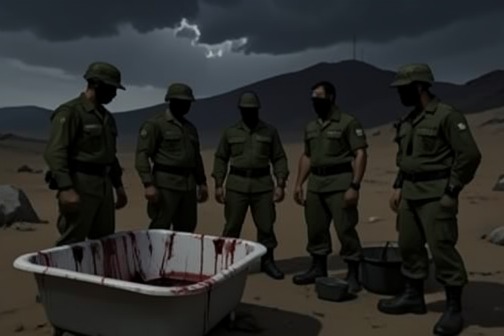
[The killing of three Iraqi prisoners at Crows' Hill](entity:event-recall-event-crows-hill-f717c2633ffb) was a concealed wartime execution that followed [Michael Downey](entity:character-recall-character-michael-downey-0fa523b266d3) and [Tommy Singleton](entity:character-recall-character-tommy-singleton-57d477aea743) beyond the [Gulf War](entity:event-recall-event-1c869af0ded6) and into the machinery of official secrecy. The men were not punished openly: the account of the killings instead leads into the concealment of the incident and the authorities’ later efforts to contain the soldiers themselves.
## Background and Circumstances
Near the end of the Gulf War, Downey and his friend Tommy Singleton served for three months as guards at [Crows' Hill](entity:location-recall-location-crows-hill-de4ee1281269), a camp for Iraqi prisoners. Among the prisoners was a group captured at an Iraqi military compound where a torture chamber had been discovered. Its equipment included electric batons and chains attached to the ceiling; a bathtub was streaked with blood, but no bodies were found. Some people treated the absence of bodies as irrelevant, reasoning that the victims had been buried. The narrative does not establish what had happened to them. Against this unsettled background, the later killing of three prisoners would itself become another violence obscured by an official account.
## The Killings and Their Concealment
In [Amos Crane](entity:character-recall-character-amos-crane-eb066a3a7112)’s account, one dark night Downey, Tommy Singleton, and several other soldiers took three Iraqi prisoners out to the wire and shot them dead. Crane speculates that the men may have been drunk or high, but admits that he neither knew nor cared; the uncertainty around their state of mind does not soften the concrete fact of the execution. The prisoners had been among a group captured at the compound where the torture chamber was found, but the narrative does not establish that these three had committed any crime or posed a threat. Their killing is presented as an act carried out by the guards, not as a recorded sentence or an authorized battlefield engagement.
The soldiers could have faced execution themselves. Instead, because the Gulf War was popular and officials did not want to spoil its public image, the authorities arranged a cover-up. Downey, Singleton, and the others were removed from Crows' Hill and kept in close confinement for the rest of the war. The concealment thus extended beyond hiding the deaths: it also meant containing the soldiers who had carried them out.
After the war, the army still did not know what to do with the group. They remained a scandal waiting to happen until they were recruited en masse for special services, a move that gave the institution a way to use them while keeping the incident out of public view. Crane’s account makes the killing part of a larger pattern in which political convenience replaces open accountability, and the men implicated in violence are first confined, then repurposed.
## The Incident’s Afterlife
After the war, the soldiers were folded into special services and then handed over to [The Department](entity:organization-recall-organization-the-department-80599272ebf9) as men officially declared dead. That erasure joined the Crows' Hill cover-up to a further secret: The Department kept the survivors at [The Farm](entity:location-recall-location-the-farm-95896ee5c8b0) to observe the effects of a nerve bomb used in a desert experiment. The experiment had failed to immunize everyone; its reported success rate was only seventy per cent, and officials expected the men’s cancers to develop before they were discarded. The soldiers’ earlier confinement had therefore become part of a longer chain of institutional use, concealment, and anticipated death.
The killings also return as an accusation in the later confrontation between [Howard](entity:character-recall-character-howard-b9b5ae3ec646) and [Sarah Trafford](entity:character-recall-character-sarah-trafford-821a08498ae2). Howard invokes Downey’s shooting of unarmed prisoners to cast him as a war criminal, while Sarah points to the government’s use of him as a guinea pig. The exchange does not undo the prisoners’ deaths or absolve Downey; it places his crime beside the state’s own concealed violence. Crows' Hill thus remains more than a buried wartime episode: it is a fact that can be used against Downey, even as the institutions invoking it have hidden their own responsibility for what happened to him.
## The Killing as a Later Accusation
Years later, Howard invokes Downey’s shooting of unarmed prisoners to persuade Sarah Trafford that Downey is dangerous and morally compromised. Sarah does not answer the charge directly; instead, she confronts Howard with the Department’s own conduct, saying Downey was used as a guinea pig. Howard replies that Downey volunteered. The exchange leaves both the prisoners’ deaths and the desert experiment in view, but places them inside competing claims about responsibility: Downey’s past violence is presented as evidence against him, while the institution’s treatment of him is defended as a choice he made.
Howard also concedes that his side wanted to make contact with Downey and bring him back into the fold, but says they did not expect him to go haywire. That explanation shifts attention from the original execution to the later consequences of institutional control without erasing the crime. Crows' Hill remains a fact Howard can wield against Downey, even as the dispute exposes how readily official responsibility is narrowed to an individual’s actions.
Event 14
The desert nerve-agent experiment
[The desert nerve-agent experiment](entity:event-recall-event-6c6c60b380bc) was a secret test disguised as a military operation: British soldiers were ordered to confront six Iraqi child conscripts, then exposed to a chemical agent while supposedly protected by an experimental coating. [Michael Downey](entity:character-recall-character-michael-downey-0fa523b266d3)’s account to [Sarah Trafford](entity:character-recall-character-sarah-trafford-821a08498ae2) reveals the betrayal at the heart of the episode: the men had not simply survived a dangerous mission but had been used as test subjects by the institution they served.
## Deployment and Cover Story
Michael recounts the operation while a television reporter speaks urgently beside an all-terrain vehicle. His attention shifts from the broadcast to the memory of being driven miles into the desert, where the soldiers were told that this was no exercise and that real enemies were waiting. Their orders were to capture those enemies and bring them back alive. The language of a live mission gave the deployment an ordinary military purpose, concealing what the soldiers would later understand as the real reason they had been taken there.
The targets were six Iraqi conscripts, but Michael rejects the idea that they were meaningful combatants. He remembers them as children who knew nothing and were not soldiers in any real sense. The contrast between the command to bring them home alive and their vulnerability makes the operation’s official framing morally unstable even before its experimental purpose is disclosed: the supposed enemy consisted of six boys placed in the path of a mission presented to the British troops as genuine.
The incident had already entered public dispute. Sarah recalls fragments of news bulletins and forceful denials in the press; the six Iraqi conscripts were reported to have died in a storm on the Syrian border twenty months earlier. Iraqi ministers, by contrast, claimed that Western troops had captured and murdered them. Michael confirms that the dead were Iraqi, connecting the public controversy to the soldiers’ concealed experience in the desert. The competing accounts turn the boys’ fate into more than battlefield rumor: what the official story obscures is bound up with the same operation that made the British soldiers victims of a secret test.
## Exposure and Immediate Effects
Michael explains that the detonation exposed the operation’s concealed purpose: it was not an ordinary bomb attack, but a test of the soldiers and of the substance applied to them. The agent had been released on a force sent into the desert under the pretext of a live mission. Michael recalls a sound like glass breaking and an air that seemed to turn muzzy; then came an intense burning pain that continued instead of killing him. He thought he should have died from a bomb, and believed he and the others were screaming. His account makes the experiment’s violence bodily and immediate: the soldiers were not merely told afterward that they had been exposed, but endured an injury they could not understand while it was happening.
As Michael suffered, [Tommy Singleton](entity:character-recall-character-tommy-singleton-57d477aea743) grabbed him and kept warning him not to look. The warning made no sense to Michael until he looked up and saw the Iraqi boys. They were not screaming; they were melting. That image joins the two parts of the experiment in a single scene: the men’s prolonged pain and the children’s catastrophic exposure. The soldiers had been told to bring the boys back alive, yet the agent turned the supposed targets into victims before their eyes, while the men themselves were being used to test what had been applied to them.
## Aftermath, Erasure, and Confinement
The coating that was supposed to protect the soldiers did not spare them from the chemical agent. Michael later understood that the blast had been a test of both the men and the substance painted onto them. He connects that experiment to the idea of a [Patriot Bomb](entity:expression-recall-expression-patriot-bomb-409853a202aa), a weapon imagined to kill an enemy without harming its own troops: a goal he calls the Holy Grail, but one he does not believe has yet been achieved. The soldiers’ suffering exposes the gap between that ambition and its human cost. Michael’s stomach bears ugly red weals in blotchy stripes, a physical trace of what the experiment did to him.
For an unknown period, the six men were kept together and subjected to blood tests and a machine that scanned the whole body. No one explained the procedures or spoke to Michael as a person; he felt treated as an object of study, as though he had arrived from another planet and his body were evidence about it. He describes becoming an un-person in the desert, reduced to an experimental result. The injury was therefore not only chemical: the people conducting the tests withheld recognition and explanation from the very soldiers whose bodies they were examining.
A glimpse through a window eventually told Michael that he was in England. The men were then moved to the [Island off Scotland's West Coast](entity:location-recall-location-ddcb42278b30). By the time they reached it, he had recovered as far as he ever would, but he still could not understand why they had not been killed. Their captors presented themselves as ordinary men keeping the soldiers safe, and repeatedly promised that they would go home soon, once a few matters had been sorted out. The promise was renewed so often that Michael remembers waiting through what felt like hundreds of tomorrows.
The deception ended when a guard whom Tommy Singleton had befriended told him that the six soldiers were supposed to be dead, having been officially lost in the helicopter crash. Michael had never been to [Cyprus](entity:location-recall-location-8d3eacb72dda), despite the death story attached to him. In retrospect, he understood that the reassuring men were guards and that the confinement was not protection. The soldiers were already erased from the public record; whether their captors wanted further tests, expected long-term effects to kill them, or were waiting for authorization to execute them, Michael could only speculate. He believed they would neither release the men nor kill them without political cover, because the soldiers belonged to Her Majesty’s forces and their deaths had already been announced. The experiment thus continued beyond the blast: secrecy turned survival into an unofficial captivity, with the false report of death helping to make the survivors disappear.
## Testimony Against the Official Story
The experiment reaches the reader as a recollection Michael Downey is trying to give Sarah Trafford, not as an immediate battlefield scene. A television reporter’s urgent broadcast brings the disputed deaths of the Iraqi conscripts into the room, but Sarah does not want to keep looking at the screen or know that a war is happening. She asks Michael to continue anyway. Her recoil makes the act of recounting part of the episode’s consequence: the account is difficult to hear, yet without it the public denials and the survivors’ experience remain separate, irreconcilable versions of events.
The exchange also refuses the clean distance of a news report. The broadcast offers a public controversy; Michael’s testimony supplies the pain, the boys’ fate, and the soldiers’ treatment as experimental subjects. Sarah cannot make that knowledge less disturbing by turning away, and her request to hear more allows the concealed history to be spoken. The scene’s force lies in that movement from mediated report to personal witness: the official account is no longer the only account available, even though the truth it reveals offers no comfort.
Event 15
The Farm prisoners' escape
[The Farm prisoners' escape](entity:event-recall-event-farm-84e670dad7a3) was the breaking point in a chain of wartime violence, official concealment, and secret detention. [Michael Downey](entity:character-recall-character-michael-downey-0fa523b266d3) recounts that he and [Tommy Singleton](entity:character-recall-character-tommy-singleton-57d477aea743) left captivity together, while the other four prisoners and all four guards were dead. The escape freed the two survivors from a system that had already declared them dead and was still monitoring the effects of a failed nerve-bomb experiment.
## Origins in war and official erasure
The prisoners’ predicament began at Crows’ Hill, an Iraqi prisoner camp where Downey and Singleton served as guards near the end of the [Gulf War](entity:event-recall-event-1c869af0ded6). A group of three Iraqis, captured at a military compound where a torture chamber had been found, were taken to the camp perimeter one night and shot by Singleton, Downey, and several others. The lack of bodies at the compound had been used to dismiss the torture evidence; the killings at Crows’ Hill became another atrocity to be managed rather than publicly confronted.
The soldiers could themselves have faced execution, but the war was popular and the authorities moved instead to contain the scandal. Singleton’s group was removed from Crows’ Hill and kept in close confinement for the rest of the war. The Army continued to hold them after hostilities ended, uncertain what to do with men whose actions threatened to become a public embarrassment. Their later recruitment for special services offered a way to use the group while postponing the problem of what would happen to them afterward.
When those services ended, the soldiers were transferred to the Department and officially recorded as dead. The cover story tied their supposed deaths to a helicopter crash near [Cyprus](entity:location-recall-location-8d3eacb72dda). The public account gave the institution a way to close the matter on paper, even though the men remained alive and under its control. Downey tells Sarah that the survivors learned on the island that the world believed them dead; until then, their guards had presented themselves as men assigned to look after them.
## Captivity and the false promise of release
Downey remembers being moved to an island off [Scotland](entity:location-recall-location-783abb4abcea)’s west coast after he had begun to recover. The guards repeatedly told the prisoners that they would soon be going home, with a few matters still to be settled. The promise was renewed day after day. Downey cannot count how many tomorrows passed while they waited for a boat, only that there must have been hundreds.
The arrangement depended on the prisoners not understanding what their custody meant. They did not initially think of their keepers as guards; the men seemed to be there for the prisoners’ welfare. Nor did the cells appear to be a sign that the captives were awaiting execution. That interpretation collapsed when one guard, a man with whom Singleton had become friendly, disclosed that the prisoners were supposed to have died in the helicopter crash. The revelation changed the meaning of the confinement: the men were not being protected until their return home but held after their identities and lives had been erased from public record.
Downey considers several possible reasons the authorities kept them alive. They might have wanted to conduct more tests, or to wait and see whether lasting side effects killed the survivors. He believes, however, that killing them required authorization powerful enough to shield those responsible, perhaps even a signed letter from the Prime Minister. They were members of the armed forces, and their deaths could not simply be ordered without someone covering the decision. Yet releasing them was no longer acceptable either, because the government had already told the world they were dead.
## The escape and its human cost
For Downey, learning the truth ended the pretense that the prisoners were being held for their own good. The guards were armed not merely to satisfy regulations, and the cells were not there for protection. In his account, the survivors were already dead in the eyes of the authorities; only the act of killing them remained unfinished. The escape therefore followed a recognition rather than a clear promise of rescue: their captors would neither let them go nor restore them to public life.
Downey reduces the escape itself to a stark fact: he and Singleton left. When Sarah asks whether it happened just like that, he insists that it did not. There had been six prisoners and four guards; only Downey and Singleton walked away. The other prisoners were dead, and so were the guards. Downey does not describe the sequence of violence or identify who killed each person, so the account leaves the precise mechanics unstated. His explanation is that they were still at war, although nobody had explained whose side they were on. The escape secured two survivors’ freedom at the cost of a scene in which eight others did not survive.
Sarah responds that she does not blame him, but Downey answers that he was not asking for her forgiveness. The exchange keeps the event from resolving into a simple story of escape and absolution. His bluntness conveys the distinction he makes between asking to be understood and asking to be pardoned; the deaths remain part of what happened, not a detail that Sarah’s sympathy can undo.
## Aftermath and narrative significance
A later account from [Amos Crane](entity:character-recall-character-amos-crane-eb066a3a7112) places the escape within the Department’s longer plan. The survivors had been sent to [The Farm](entity:location-recall-location-the-farm-95896ee5c8b0), a remnant of the era of germ warfare, because the authorities wanted to observe how long it would take them to die from the nerve bomb’s effects. The experiment had failed: immunization had worked in only seventy per cent of cases, but the Department still considered the statistics worth retaining. The soldiers were meant to remain at The Farm until their cancers took hold, after which they would be discarded. Their escape interrupted that timetable before the anticipated illnesses could finish what official erasure had begun.
The episode also helps explain why Downey’s knowledge makes him a target in the present. Sarah realizes, as he tells her what happened, that people want him dead because he knows too much—and that she now knows it too. Crane likewise understands that the escape has set later events in motion: believing Downey will come looking for [Dinah](entity:character-recall-character-dinah-b8a1923e6610), he positions himself near the island. In this way the escape is both a past act of survival and the cause of renewed pursuit. The men who were meant to remain hidden and die instead re-enter the story as witnesses whose survival threatens the people responsible for their confinement.
Event 16
Joe's killing
[Joe](entity:character-recall-character-joe-9b197d8c56ff) Boehm’s killing is a defining offstage crime in the novel: [Sarah Trafford](entity:character-recall-character-sarah-trafford-821a08498ae2) identifies [Rufus](entity:character-recall-character-rufus-46e67b5a0ca5) as the man who killed him and tried to kill her, and [Zoë](entity:character-recall-character-zo-4329e1cc1b09)’s response makes clear that the murder has become both a personal loss and an unfinished investigation. The story withholds the killing itself; its force emerges instead through belated disclosure, memory, and the consequences that carry Zoë onto the sea in pursuit of the trail Joe left behind.
## Disclosure and the Killer
Sarah tells Zoë that Rufus was responsible for Joe’s death. She also identifies him as the man who tried to kill her and reveals that he was a covert operative. The short exchange revises the meaning of the danger Sarah has faced: the person she had known under the name Rufus was not merely a suspicious acquaintance, but the killer of Zoë’s partner and an agent operating under a false identity. The canonical account identifies Rufus as [Axel Crane](entity:character-recall-character-axel-crane-25af318ec048)’s cover identity, tying the murder to the wider network of violence surrounding Sarah’s search for [Dinah Singleton](entity:character-recall-character-dinah-singleton-3fb6eb701a31).
The disclosure comes during a conversation in which Sarah has momentarily lost sight of how much Zoë has suffered. Recognizing that Zoë needs the facts, she names Rufus and explains the connection to Joe’s death. Zoë’s repeated exclamation of shock is followed by a long silence as she looks out to sea. The pause does not resolve her response into a simple declaration of vengeance: Sarah briefly wonders whether Zoë wanted to kill Joe’s murderer herself, then dismisses the thought. What the scene establishes directly is that Zoë must absorb the truth before Sarah can bring her up to speed on [Michael Downey](entity:character-recall-character-michael-downey-0fa523b266d3), [Dinah](entity:character-recall-character-dinah-b8a1923e6610), and the circumstances that brought her there.
## The Death as Memory
The murder is not presented as a witnessed scene. Zoë recalls it from the boat, where the movement of the sea makes her physically ill and her memories repeatedly return to Joe. She cannot summon a memory that will distract her from the loss: even memories that were not wholly unhappy end in the knowledge that Joe was killed. She recalls that his throat was cut by a stranger. The plainness of this detail offers no spectacle or explanation, only the abrupt fact that a person she knew is dead.
That recollection gives the journey its immediate personal cause. Zoë recognizes that, if the details are stripped away, Joe’s murder is why she is on the boat. His pursuit of a trail ended before he could follow it to its conclusion; years after he compared himself to a bloodhound who never stopped once on a scent, Zoë finds herself continuing the search he could not finish. The image turns their remembered conversation into a measure of what has changed: the dogged investigator is gone, while the person who once regarded his enthusiasms with irritation has taken up his unfinished pursuit.
## Zoë’s Grief and Joe’s Character
Zoë remembers that Joe’s openness could exasperate her. He readily shared his enthusiasms and personal history, fell in love with people quickly, and wanted to hear about them in return. She had been driven mad by what she saw as his emotional excess, and at times his way of opening himself had driven her away. Yet the same quality now gives her memories their painful intimacy. Her mockery of his bloodhound comparison does not cancel her attachment; it shows the familiar friction that made him a particular person to her, rather than an idealized figure constructed after his death.
Her grief arrives alongside anger and a wish to act. Remembering that Joe will never grow old, Zoë wants to cry, shout, or hurt someone. She recalls his fondness for Philip Larkin and the poem associated with [Cemetery Road](entity:expression-recall-expression-cemetery-road-86655c4c2d97), then reflects bitterly that Joe had been helped down that road before his time and without expecting it. The literary allusion makes the language of an ordinary death feel cruelly inadequate: Joe’s death has the finality of a departure, but not the expected timing or consent. Even if the person Sarah says killed him is dead, Zoë concludes that the outstanding debts have not thereby disappeared.
## Consequences and Narrative Significance
The killing changes Zoë’s relation to Joe’s unfinished work. His old description of himself as a bloodhound had once seemed to her another instance of his indiscriminate enthusiasm; now it becomes a task she is carrying forward because he never got to finish. Her presence on the boat therefore joins grief to action without making either one disappear. The pursuit is not presented as a neat cure for loss: Zoë remains seasick, sweating, and so distressed that her grief breaks through in the physical misery of the crossing.
The disclosure also draws Zoë into Sarah’s larger account. After Sarah tells her who killed Joe, she explains why she is there, who Michael Downey is, and where Dinah is. Joe’s murder thus serves as a point of entry into the wider chain of danger and concealment, but it retains its separate human weight. For Sarah, it is among the losses she had temporarily pushed out of view; for Zoë, it is the death of someone she loved, whose trail and debts remain unfinished. The novel’s choice to reveal the crime through these aftermaths makes its consequence—not the mechanics of the attack—the event’s narrative center.
Event 17
Sarah's attack and Axel's death
Sarah's attack and [Axel Crane](entity:character-recall-character-axel-crane-25af318ec048)'s death reveal that the apparently ordinary figure known as [Rufus](entity:character-recall-character-rufus-46e67b5a0ca5) was a killer who had been tracking [Michael Downey](entity:character-recall-character-michael-downey-0fa523b266d3) since the bombing of the Singleton house. [Axel](entity:character-recall-character-axel-e9f7c8d6b5e7)'s dental floss left a mark around Sarah's throat; Michael's pursuit of him brought the danger into the open and ended with Axel dead. In its aftermath, the attack is both a bodily wound Sarah cannot dismiss and a clue to the machinery of surveillance, official intervention, and concealment surrounding her.
## The attack and its immediate aftermath
The attack reaches Sarah first as an involuntary memory. While she and Michael lie low behind a Do Not Disturb sign, Michael keeps her away from the windows and has food left outside their door. Whenever she tries to regard the precautions as absurd, she sees the previous evening again: Rufus winding dental floss around her throat, pulling it tight enough to leave a mark. The detail makes the violence intimate and difficult to explain away. The weapon is slight and ordinary, but the pressure it exerts is real; in the mirror, Sarah sees a thin red line that she understands as a reminder of mortality, not a bleeding wound.
The mark remains after the immediate assault has passed. Its appearance gives Sarah physical evidence of what happened, while her recurring recollection shows that the danger has not become merely past. The contrast between the discreet cord and the lasting trace makes the attack feel at once concealed and undeniable. Even in hiding, Sarah cannot make the episode harmless by calling it ridiculous: the memory returns with enough force to interrupt that thought.
## Why Axel was watching
Michael later explains why he had suspected the man Sarah knew as Rufus. The day after the bomb destroyed the Singleton house, Axel was near what remained of it, and he continued to appear there each day. Sarah had taken him for one among the many sightseers. Michael distinguishes his attention from theirs: Axel was not watching the fire crews, but watching the people who watched them. Michael believed he was waiting for him, and said that he recognized the type of man Axel was. His conclusion was blunt: Axel was a killer.
The attack confirms that Michael's reading was not a mistake. When Sarah asks whether he had been wrong, the narration establishes that he had not. Axel's presence at the ruins thus changes meaning in retrospect. What looked like curiosity about a public disaster was surveillance directed at the people around it, and the repeated appearances were not incidental. The attack on Sarah is the violence that makes the earlier pattern legible: Axel had been waiting for Michael, and Sarah became a target within that pursuit.
## Death, flight, and official attention
Axel's death does not offer Sarah a simple return to safety. Michael considers what will happen if Sarah's husband, [Mark Trafford](entity:character-recall-character-mark-trafford-85ced97005d3), gets home, finds a body, and discovers that Sarah has left. Sarah is certain that Mark will go to the police. Michael anticipates how quickly that ordinary route could become an official one: local officers could see Axel's identification and contact the Home Office, after which men in suits would arrive to decide what had and had not happened. He speaks of that process while exhausted, but the chain of consequences he describes is precise. The danger is not only discovery; it is that the account of events may be taken over by people with the power to define it.
The scene does not establish that this response has already occurred. It presents it as the risk shaping their choices as they keep out of sight. Michael's precautions at the door and windows belong to the same predicament: they are trying to avoid being found while knowing that the police, and then government officials, could turn Axel's death into a matter beyond their control. His death ends the immediate physical threat from the attacker, but leaves the pair exposed to the institutions that might manage the story of the attack.
## What Sarah later tells [Zoë](entity:character-recall-character-zo-4329e1cc1b09)
Later, Sarah gives [Zoë Boehm](entity:character-recall-character-zo-boehm-d0e8e2140692) the facts she needs to know. She identifies Rufus as the person who killed [Joe Silvermann](entity:character-recall-character-joe-silvermann-41587a2ef7a0), tried to kill her, and was a spook. Zoë connects this Rufus with the man married to Sarah's friend. Sarah has, by then, nearly lost sight of the fact that other people have suffered the worst losses; telling Zoë is a shift from enduring the recent danger alone to acknowledging its consequences for someone else.
That disclosure brings together violence that could otherwise look like separate episodes. Rufus's attack on Sarah is linked to Joe Silvermann's death, while the description of Rufus as a spook places both within a world of covert action. The name had concealed Axel; the later account strips away that cover and states what he did. Sarah's surviving throat mark, Michael's recognition at the bomb site, and her testimony to Zoë form a chain of evidence that makes the attack more than a private ordeal: it exposes how a killer's surveillance and a concealed identity reach into the lives of those around him.
Event 18
Sarah framed for drug possession
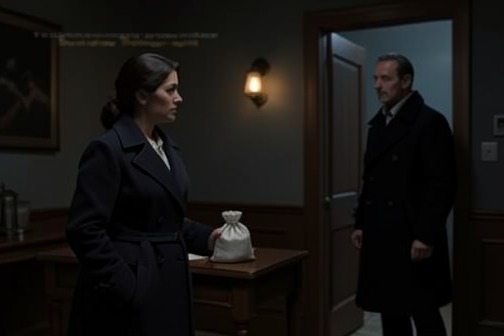
The framing of [Sarah Trafford](entity:character-recall-character-sarah-trafford-821a08498ae2) for drug possession was an attempt by [Axel Crane](entity:character-recall-character-axel-crane-25af318ec048), operating under the cover identity [Rufus](entity:character-recall-character-rufus-46e67b5a0ca5), to force her out of her search for [Dinah Singleton](entity:character-recall-character-dinah-singleton-3fb6eb701a31). The planted cocaine was meant to exploit Sarah’s past and undermine her credibility; when that failed, she remained in danger, while the official and press narratives surrounding her made it harder for her to establish what had happened.
## Causes and Background
Sarah’s search began after the bombing of the Singleton house, where [Dinah](entity:character-recall-character-dinah-b8a1923e6610) had lived. She went looking for the child with [Joe Silvermann](entity:character-recall-character-joe-silvermann-41587a2ef7a0), who was killed; Sarah later explained that she was then framed and that, after resuming the search, Rufus tried to kill her. Her account connects the drug charge to a specific chain of events: a missing child, a dead friend, and an effort to prevent her from continuing to ask questions.
The scheme was devised to take Sarah out of the picture by drawing on her background and planting a bag of cocaine. Axel Crane assessed her as a potential problem precisely because she had not responded as expected to intimidation. He considered whether she might be as easily broken as her husband, [Mark Trafford](entity:character-recall-character-mark-trafford-85ced97005d3), but concluded that she was more likely a fighter than foolish. The failed attempt to discredit her thus became, in his thinking, evidence that she might understand the danger she had entered.
## The Charge and Sarah’s Account
When [Gerard Inchon](entity:character-recall-character-gerard-inchon-6b5fcb646765) asks whether Sarah was caught with drugs, she answers that they were planted and identifies Rufus as the person responsible. Later, she gives the charge its context: she had been looking for the girl from the bombed house, [Joe](entity:character-recall-character-joe-9b197d8c56ff) had been killed, and she had been framed; when she began searching again, Rufus tried to kill her. Her voice breaks as she recounts this sequence, and she pauses before continuing. The account is not simply a denial of possession; it is her explanation of why the accusation appeared when it did and what followed from it.
The available account does not specify where or when the drugs were found, how much cocaine was involved, or the precise procedure by which Sarah was caught. What it does establish is the intended mechanism: a planted bag, selected to make her past useful against her, could cast her as an unreliable witness rather than a person investigating the bombing and Dinah’s disappearance. The framing therefore worked through both immediate danger and the credibility that Sarah would need to make her story heard.
## The Attempt’s Failure and Its Aftermath
The plan did not remove Sarah from the picture. Axel Crane’s assessment recognizes that the ruse had failed, and Sarah continued searching; she later directly links the planted drugs to that search. But survival did not restore her standing. [Zoë Boehm](entity:character-recall-character-zo-boehm-d0e8e2140692) lists Sarah’s drug charge among the reasons she would have little credibility: Sarah had been caught with drugs, her husband was a thief, and the secretive authorities had made Rufus disappear, leaving her unable to prove that he had been near her home.
That catalogue shows how the accusation could keep doing damage after the immediate attempt to stop Sarah had failed. Her account depended on connections—to the bombed house, Joe’s death, and Rufus’s attempt on her life—that others could dismiss or that she could not independently prove. The planted drugs supplied a ready-made reason to distrust her, while the disappearance of Rufus deprived her of a visible suspect against whom she might substantiate the charge.
## Public Narrative and Significance
The public story further distorts the facts Sarah is trying to establish. Rufus is officially said not to be dead; the reported account associates him with terrorists, says he used [Wigwam](entity:character-recall-character-wigwam-86bed3b11c33) as cover and went to ground when exposed, while the press has been told not to print anything about the matter. [Zoë](entity:character-recall-character-zo-4329e1cc1b09) also points out that [Michael Downey](entity:character-recall-character-michael-downey-0fa523b266d3) is officially considered dead, and that the body attributed to [Thomas Singleton](entity:character-recall-character-thomas-singleton-76bcf0e013bf) was not Singleton’s, with cremation making proof difficult. These details widen the context beyond Sarah’s individual accusation: disappearance, controlled reporting, and doubtful identifications make the truth unusually hard to demonstrate.
The framing is therefore significant as more than an isolated planted-drug incident. It turns Sarah’s search into a liability by making her own credibility part of the battlefield. The failed attempt to discredit her does not resolve the danger; instead, the charge remains embedded in a public account that obscures the people and events she is trying to expose. The discrepancy between Sarah’s explanation and the story available to others preserves the central uncertainty around Rufus and the missing child, while showing how an accusation can constrain a witness even when it has not silenced her.
Event 19
The assassination attempt against Amos Crane
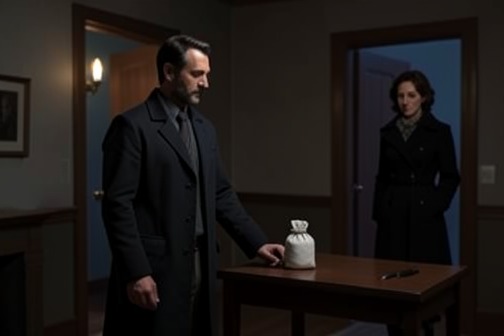
[The assassination attempt against Amos Crane](entity:event-recall-event-amos-crane-ffb344e1ee56) is a failed operation arranged by [Howard](entity:character-recall-character-howard-b9b5ae3ec646), whose effort to remove a dangerous former colleague instead leaves three hired operatives dead and turns Crane openly against him. The episode is shaped by the gap between Howard’s expectation of a manageable covert job and the evidence that he has sent inexperienced men against a professional. By the time Howard reaches Crane’s flat, the attack has become a warning: Crane is alive, on his way to [Scotland](entity:location-recall-location-783abb4abcea), and still pursuing [Michael Downey](entity:character-recall-character-michael-downey-0fa523b266d3).
## Background and commission
Howard has Crane’s written apology on his desk, a carefully phrased document that acknowledges an incident without naming it as a violent assault. The letter is evidence of a strained departmental relationship, but Howard’s attention has moved from its language to Crane’s movements. He has had Crane’s flat watched and arranged for three freelance operatives to be sent there. Howard tells himself that using outsiders is a considerate choice: he could not send colleagues to see Crane off. The more troubling explanation is that people who have worked with Crane would be too afraid to take him on.
The surveillance is mundane enough to make the danger seem, at first, administratively controlled. Two watchers sit in a van marked The Fabulous Bakin’ Brothers, decorated with a rabbit eating a cookie; a third waits in a nearby launderette as the same load of washing turns repeatedly. The operatives are not departmental colleagues but freelancers, and Howard’s account of why he chose them masks his fear of involving anyone who knows Crane. The contrast between the comic van and the lethal assignment captures the operation’s shabby concealment without making its stakes any less serious.
## The silence after dispatch
Three hours before Howard goes to Crane’s flat, the watchers report that the “product” has arrived and will be sent out as soon as possible. After that, there is no further call. Howard repeatedly buttons and unbuttons his jacket, catches himself, and forces his hands onto the desk; the tremor is severe enough that his own effort to describe it as slight cannot hold. The delay turns a covert operation into a test of what he has set in motion. He picks up the apology and puts it down again, with nothing from the men he has sent to resolve the uncertainty.
Howard tries to imagine explanations that would leave the operation intact. Crane is older; perhaps the freelancers have finished and gone to supper without reporting in. But Howard knows the silence does not mean they have simply forgotten to call: they are beyond the reach of any mobile. His assessment of the assignment shifts as he waits. An “accident” arranged for an overweight minister, he reflects, is not the same as preparing an early grave for a professional like Crane. The distinction exposes the mistake in Howard’s calculation: the men may be willing and confident, but their confidence does not make them a match for their target.
## The flat and the reversal
Howard eventually goes to see for himself. He takes the tube a few stops through Central [London](entity:location-recall-location-london-420923d4a60a) and walks to the block above a dying record shop, where Crane has kept a flat for several months. Crane moves several times a year, though Howard has never decided whether this is professional caution or an inability to settle. On the way upstairs, Howard notices the dark, damp stairs and the first-floor door marked with ornate cigarette-burn lettering. He tells himself that the strain in his breathing comes from the climb, even as he unbuttons his jacket again and imagines Crane confronting him for sending amateurs after a professional.
For a moment, Howard pictures a grisly scene: Crane, bloody-handed and bloody-toothed, with the would-be assassins hanging from the fixtures. That image is explicitly his fearful expectation, not what he finds. The flat is empty. An open window lets street noise pass through rooms that give no sign of Crane’s presence, and Howard has to sit down. The anticipated confrontation has been replaced by absence; he has arrived too late to control either the operation or the account of what happened.
On the glass-topped coffee table, Howard finds Crane’s note. Crane treats the afternoon’s events as constructive dismissal, says he is leaving for Scotland, and remarks that some jobs cannot be let go. He identifies Michael Downey as his quarry and tells Howard, “Downey is mine. Remember that.” The note also warns Howard that Crane will attend to him on his return. Its businesslike references to pay and notice turn a failed killing into a resignation delivered on Crane’s terms, while its threat makes clear that Howard has become part of the conflict.
## Aftermath and significance
Howard finishes his wine before going to the bathroom, where he finds the three operatives left in the bath. Their bodies confirm what the unanswered calls and empty flat had already implied: Crane overcame the men sent to kill him, then left the scene. The note’s apology for the mess is an understated counterpoint to the violence, and the bodies reveal how badly Howard misjudged the man he had targeted.
The failure also exposes the limits of Howard’s institutional power. He had chosen freelancers partly because colleagues feared Crane, yet that choice put the job in the hands of men Howard himself recognizes as amateurs. He had wanted to be the first to learn what happened so that he could choose how to present it; instead, Crane has left a written account that names Howard’s action as the reason for his departure and announces his own next objective. The attempt therefore changes the balance between them: Crane survives, pursues Michael Downey toward Scotland, and leaves Howard with both a warning and the consequences of his decision.
Event 20
The Farm massacre and Dinah's removal
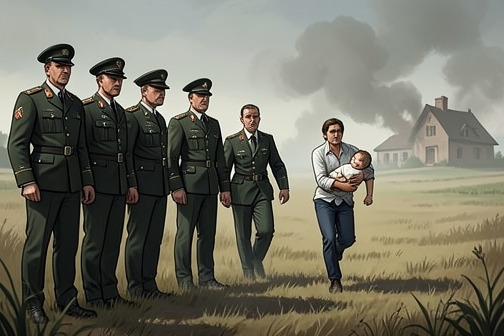
[The Farm massacre and Dinah's removal](entity:event-recall-event-farm-dinah-2d935303cd0c) reaches the reader not as a witnessed assault but as a trail of bodies, damage, and absence that [Sarah Trafford](entity:character-recall-character-sarah-trafford-821a08498ae2) and [Zoë Boehm](entity:character-recall-character-zo-boehm-d0e8e2140692) piece together on the island. Their search turns a remote farmhouse into evidence of lethal violence, and the discovery of a wounded woman and [Dinah Singleton](entity:character-recall-character-dinah-singleton-3fb6eb701a31)’s abandoned belongings leads Sarah to conclude that [Michael Downey](entity:character-recall-character-michael-downey-0fa523b266d3) came in the night or early morning and took the child. The scene’s decisive change is both physical and moral: [Dinah](entity:character-recall-character-dinah-b8a1923e6610) is gone, while Sarah’s understanding of the man who took her is violently unsettled.
## The first signs of violence
Twelve minutes after Sarah and [Zoë](entity:character-recall-character-zo-4329e1cc1b09) set out, they find a body face-up just yards from what appears to be a farmhouse, an old stone bungalow built into a dip in the rock. The dead man is young, and an apple remains in his hand. Zoë judges that his death was violent, but does not turn the body over to confirm it; alone in the middle of nowhere, she has no wish to handle a corpse. Sarah calls it another body, though Zoë realizes she means the one in front of them. The exchange makes the discovery feel less like an isolated death than the first visible sign of a larger scene.
Zoë connects the body to Michael, and Sarah agrees only in a detached way. Concerned that Sarah might come apart, Zoë takes the small silver gun from her shoulder bag and asks whether Sarah wants to stay outside. Instead, Zoë leads the approach to the house. [The island](entity:location-recall-location-the-island-51ec41aeb699), quiet before the discovery, now seems filled with wind moving loose pebbles and tussock grass, and waves striking the rocky edges. Zoë briefly considers whether a shot might bring Jed back to collect them, but she is already pushing open the heavy wooden door. Her moment of imagined retreat gives way to entry before she can act on it.
## Inside the farmhouse
The colder air inside offers no clear answer about whether the house is empty. In the kitchen, Zoë finds a dead man beside an oven and a sink still stacked with dirty dishes. A dark stain spreads across the blue cotton of his T-shirt, and she identifies him as having been shot. Her body begins to numb with shock and fear, while her thoughts remain practical: the man is dead, but neither she nor Sarah has been shot. That cold assessment registers how quickly the discovery has made survival the immediate measure of what is going well.
Sarah’s breathing catches behind Zoë, then releases; an angry, buzzing sound comes from somewhere overhead and fades. The upper floor yields no further bodies, living or dead. It contains two tidy, almost monastic-looking bedrooms and a living room with an uncomfortable, untidy sofa and an unswept fireplace. There is no sign of a child, and little evidence of settled life. The rooms suggest a temporary occupation, but cannot explain what happened or where Dinah is. Zoë hears no apparent sign of life below stairs, correcting herself inwardly: no one alive, perhaps. The distinction sharpens the dread as the search continues.
In the corridor downstairs, a wet, hiccuping sound comes from behind a closed door. Zoë’s reflex carries her toward it rather than away. She opens the nearest door and feels it stop against something soft and small; at first she thinks it may be another child’s body. Then movement to her left draws her attention to a woman curled against the wall. Zoë drops into a crouch, nearly forgets the gun in her hand, and then puts it back in her bag as she approaches. The woman is frightened and hurting, not dead. Zoë sees blood leaking from the woman’s hands, and concludes that she has been shot. The massacre is no longer only a set of bodies to be counted: someone has survived it, gravely injured and unable to explain what happened.
## Dinah’s traces and Sarah’s conclusion
Sarah does not move the wounded woman; she does not know how to move her safely. As she looks around, she notices childlike pictures fixed to the walls with blu-tack: other children, animals, the sky, the sun, and a house. Each drawing gives the earth a strip of green at the bottom and the sky a strip of blue at the top. Sarah recognizes the room as belonging to Dinah. Nearby lies a large blue teddy bear, shot. Its damage makes the child’s absence more immediate: the room preserves traces of her, but she is not there.
Sarah infers that Michael came during the night or early morning, left the dead and wounded behind, and took Dinah. The wording of her conclusion matters: she supposes it was him. The scene gives her compelling signs, but its violence is discovered after the fact, not witnessed, and Sarah is still trying to fit what she sees to what she knows. She is surprised to find Michael fading in her memory, because the man she thought she knew no longer sits easily beside the apparent cause of this mayhem. Her revulsion is sharpened by their intimacy: she has lain with him, and now wonders whether she would have let him save her life if she had known what he was capable of.
## The wounded woman and the aftermath
Sarah’s judgment remains incomplete. She recognizes that she barely understands the bond between Michael and [Thomas Singleton](entity:character-recall-character-thomas-singleton-76bcf0e013bf), though she knows it was sealed in blood and could not be broken by less. She also recalls the painful complication that [Maddy Singleton](entity:character-recall-character-maddy-singleton-8b9fd5335c1c) was married to Michael’s fellow soldier. These fragments do not explain the attack, but they prevent Sarah’s conclusion from becoming a simple account of motive. The violence is clear; the relationships that might illuminate it remain only partly legible to her.
With no other help to offer, Sarah goes to retrieve the bear. She fears that the woman may die in the moments she is away, yet the woman is still breathing when Sarah returns and kneels beside her with the ridiculous blue toy in her hands. The light in the woman’s eyes seems to flicker, though Sarah cannot tell whether that is truly happening or whether her own eyes are watering in the gloom. The bear is not a rescue and cannot undo what has happened; it is the one available gesture of care in a house marked by gunfire, absence, and helplessness. Zoë comes back upstairs, while the wounded woman speaks again. The search has located the massacre’s survivors and Dinah’s traces, but it has not recovered Dinah or established the full truth of Michael’s actions.
Event 21
Death of Dinah’s mother
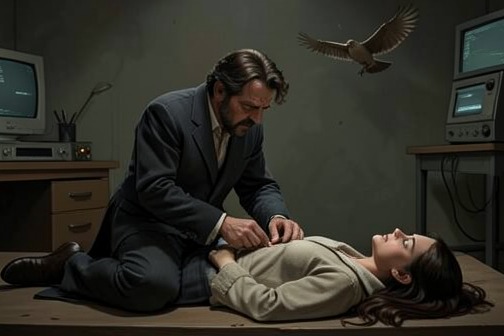
The death of [Dinah](entity:character-recall-character-dinah-b8a1923e6610)’s mother is a sudden turning point whose force lies as much in its aftermath as in its finality: [Sarah Trafford](entity:character-recall-character-sarah-trafford-821a08498ae2) has to contain her own response while Dinah, held safely by [Michael Downey](entity:character-recall-character-michael-downey-0fa523b266d3), has not yet learned that her mother is gone.
## The Death
A man bent over the woman and checked her pulse. She died two minutes later. The account gives no cause of death; its emphasis is on the abruptness of the end, which arrives after a brief interval of struggle rather than a gradual decline. Sarah later finds it difficult to decide whether the death represented relief or defeat for the woman herself.
The narration renders that ending as a full stop: the woman’s struggle ceases suddenly. The brevity is stark, but the consequences continue beyond the moment. Her death leaves Dinah without her mother, even though Dinah does not yet know what has happened.
## Sarah’s Response
After leaving the room, Sarah walks upstairs and out into the light and air. Birds wheel a couple of hundred yards away, apparently drawn to something on which they can feed. Their distant movement sits against Sarah’s effort to master what she has just witnessed: she expects to cry, but does not. Instead, emotion gathers within her, held back rather than released.
Sarah cannot settle on a single meaning for the woman’s death. Her uncertainty—relief or defeat—keeps the scene from turning the woman’s final moments into a simple judgment. The physical fact of death is certain; what it means to the woman remains beyond Sarah’s knowledge.
## Dinah and the Immediate Aftermath
When Sarah approaches, Dinah is resting in Michael Downey’s arms, apparently trusting that he will keep her safe. Sarah opens her arms and asks whether Dinah wants to come to her, but initially tells her to stay where she is and let Michael hold her. The hesitation acknowledges the child’s immediate need for security rather than treating Sarah’s journey to reach her as something Dinah must understand or repay.
Dinah then wriggles in Michael’s arms and holds out her hands to Sarah. The gesture offers a small, concrete movement toward Sarah at the same moment that Dinah remains unaware of her mother’s death. The reunion therefore carries both tenderness and an unspoken loss: Dinah can choose to reach for safety, but cannot yet comprehend the change that has taken place.
Event 22
Michael’s rescue of Dinah from the island
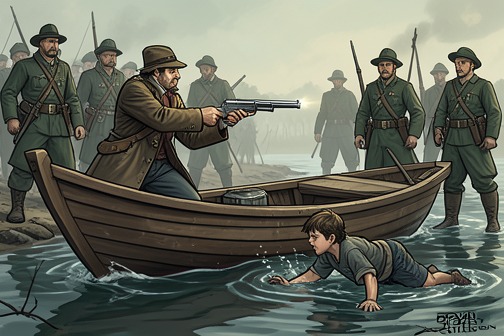
[Michael Downey](entity:character-recall-character-michael-downey-0fa523b266d3)’s rescue of [Dinah](entity:character-recall-character-dinah-b8a1923e6610) from the island turns a government operation meant to draw him out into a violent escape—and brings its hidden purpose into view. He arrives by motorboat, kills the guards, and takes Dinah away; afterward, officials confront not only his escape but the possibility that he can expose a state crime they have worked to conceal.
## The operation and its stakes
[The island](entity:location-recall-location-the-island-51ec41aeb699) forms part of an effort to control what Michael Downey might reveal. Earlier, C warns [Howard](entity:character-recall-character-howard-b9b5ae3ec646) that the country is prepared to take up arms to prevent Downey from speaking publicly. The warning makes the stakes larger than a pursuit of one man: the government is willing to contemplate war rather than permit disclosure.
The reason for that fear emerges in Howard’s later account of the military operation. Britain is at war alongside its allies, and an official revelation that British forces were responsible for using a chemical weapon on live targets would undermine the country’s public claim to be protecting democracy. Howard points to the possibility of sanctions and retaliatory missiles, but his language also exposes the underlying political calculation: the state’s concern is not only the harm done to its victims, but the consequences of the world learning who caused it.
Downey is officially dead, making any account from him especially dangerous. Howard tells his colleague that Downey is technically dead and that the government can prove it; the contradiction between official status and living witness is part of the machinery of concealment. The risk has also changed since Downey’s earlier escape with [Thomas Singleton](entity:character-recall-character-thomas-singleton-76bcf0e013bf). He is no longer alone: he has Sarah with him, and the prospect of a witness who can speak from outside the military setting makes the present confrontation harder to manage.
## The rescue
Sarah was being used as bait to induce Downey to come to the island. When she accuses an official of that plan, he concedes that she was bait, while insisting that she was not meant to be hurt. The distinction offers little comfort: the plan treated her safety as something officials could promise while deliberately making her vulnerable to the consequences of their scheme.
By the time Howard arrives, the attempt to control Downey has already failed. Brian reports that Downey came early that morning by motorboat. He killed the guards, took Dinah, and left. The men watching the house could have captured him, Brian says, but Howard had not wanted that outcome. The mission’s purpose had changed, though Howard does not explain to Brian that [Amos Crane](entity:character-recall-character-amos-crane-eb066a3a7112) was responsible for the change.
The rescue is therefore not a simple success in which a child is brought to safety without cost. Dinah is taken from the island, but the operation has put Sarah in danger and left dead guards behind. Brian says the men left Dinah in the kitchen, where Downey may have thought the situation was a trap, yet he took her anyway and returned to his boat. The watchers only learned what had happened after another man called them; the abrupt arrival of further passengers compounded the confusion at the scene.
## Aftermath and moral cost
The escape revives an earlier pattern that the officials should have anticipated. Sarah reflects that the last time Downey was put on the island, he left bodies behind him, and she wonders why anyone expected a different outcome now. Her judgment connects the immediate killings to the government’s repeated choice to create dangerous conditions and then treat their violent consequences as surprises.
Watching the sea’s wake disappear, Sarah thinks of the way water erases a white scar and contrasts that visible healing with pollution that cannot be seen. The image extends to Downey: she considers not only the toxic explosion in the desert but what kind of damage could make a person kill whoever stood in his way. Her response is weary disgust, not a clean celebration of rescue. Dinah has been taken away from the island, but the escape leaves Sarah confronting both the violence surrounding Downey and the violence built into the state’s attempt to capture him.
## Secrecy and consequence
Howard later defends the government’s concealment as a form of cleanup. He tells Sarah that those responsible for the killings of boy soldiers were punished, but insists that the public never knew because people do not want to learn what happens at the margins of democracy. In his account, secrecy is not an unfortunate by-product of the operation; it is the job itself. Sarah challenges the logic by pointing out that the government used a child. Howard answers that Dinah is all right, treating her survival as proof that the choice was acceptable.
The threat that follows makes the consequences of the rescue plain. If Sarah kills Howard, he says, the department will remain and move into overdrive: Downey, Dinah, Sarah’s husband, her old friend [Wigwam](entity:character-recall-character-wigwam-86bed3b11c33), and anyone else she has been in contact with could suffer what he calls major accidents. The warning echoes C’s earlier insistence that the government would do whatever was necessary to stop Downey from going public. The rescue has removed Dinah from the island, but it has not ended the state’s power to pursue or silence those connected to her. Its decisive reversal is that Downey escapes with the child, while the people responsible for the trap retain both their secrecy and the means to threaten everyone around him.
Event 23
Reunion at the chapel
The reunion at the chapel is the point at which [Sarah Trafford](entity:character-recall-character-sarah-trafford-821a08498ae2)’s search for [Dinah](entity:character-recall-character-dinah-b8a1923e6610) reaches [Michael Downey](entity:character-recall-character-michael-downey-0fa523b266d3) and the child herself. A place Michael had once shared with [Tommy Singleton](entity:character-recall-character-tommy-singleton-57d477aea743) as a hiding place becomes, years later, a refuge again—and the setting for Sarah and Dinah’s first meeting.
## Finding the Chapel
Sarah recognizes the location through a memory rather than a promise. Michael had talked about the chapel when he and Tommy Singleton escaped; this was where they had hidden. Once Sarah remembers, she insists to [Zoë](entity:character-recall-character-zo-4329e1cc1b09) that she knows where they are. Their route leads to a chapel by a wood, a little way up the coast, which Sarah describes as deserted and recalls as the sanctuary where they sheltered on their first night. What was once an improvised refuge for two escapees has become the place where Sarah expects to find Michael and the missing child.
## The Chapel Door
Crossing the threshold does not bring Sarah into uncomplicated safety. The bare interior recalls the chapel at [The Arimathea Home](entity:location-recall-location-the-arimathea-home-458901a0c56b), where she had first gone looking for Dinah, and the old, stone-locked air brings the accumulated violence of her life into the present. Her memory breaks into bright, abrupt images: a house collapsing, sparks rising into the dark; a man bleeding at his desk; another trying to kill her with dental floss; and her own fall from a roof years before, lights wheeling around her. The chapel gathers these separate dangers into one passage of time. Sarah sees herself still moving through each moment in turn, now searching for a girl who, like her, has survived.
The present scene is starkly spare: no benches, altar, or other furniture, only a filthy stone floor, cracked windows, and low, bare beams. Against the wall sits Michael Downey, holding Dinah. He has a gun trained on Sarah. For an instant she imagines the future collapsing into the shot—his firing, her fall, the world going black—but that feared outcome does not occur. Michael lowers the gun as Sarah emerges from the shadows, raises it again when he sees Zoë behind her, then puts it down once more. Zoë is armed too, yet the immediate standoff gives way without a shot. Michael looks exhausted, as though nearly half dead, and the meeting begins not with explanation but with the two women confronting the danger and fatigue that have brought them to him.
## First Contact
Sarah steps past the armed standoff and crouches beside Michael to look at Dinah. The child is awake: a small blonde girl with large green eyes, who studies Sarah without blinking before turning her face into Michael’s chest. Michael observes that Dinah looks like [Maddy Singleton](entity:character-recall-character-maddy-singleton-8b9fd5335c1c); Sarah answers that the girl is beautiful. The brief exchange shifts attention from the guns and the danger outside to the child herself, whom Sarah has crossed so much distance to find.
Sarah holds out her arms, but Dinah initially remains nestled against Michael as if she trusts him to keep her safe. Her mother is dead, and Dinah does not yet know it; Sarah recognizes that the child has no reason to understand the journey that has brought her here. She tells Dinah she can stay where she is. Then Dinah wriggles in Michael’s arms and reaches both hands toward Sarah, making the choice Sarah had not presumed to ask of her.
Sarah sets the teddy bear down in the dust and lifts Dinah. The transfer registers as weight and warmth, and as the immediate physical reality of a child: working lungs, an empty stomach, the need for food and sleep. Sarah can offer only a moment’s peace, not undo what has happened or meet every need at once. When Dinah points at the bear and remarks, “That man again,” the small object remains part of the reunion’s close, uncertain present: the child is in Sarah’s arms, but the world she has endured is not yet fully known to her.
## A Reunion Without Resolution
The encounter answers the immediate question of where Dinah is, but it does not make the dangers that brought Sarah Trafford there disappear. Its decisive change is relational: a search conducted across memories of violence becomes direct responsibility for a living child, while Dinah’s gesture establishes a connection that no explanation could have secured in advance. The scene therefore closes one uncertainty and opens another. Sarah has found Dinah; what the child has endured, and what care will require, remain beyond this first meeting. The chapel offers no return to an undamaged past, only a brief point of contact from which the next part of their lives must proceed.
Event 24
Final confrontation at the chapel
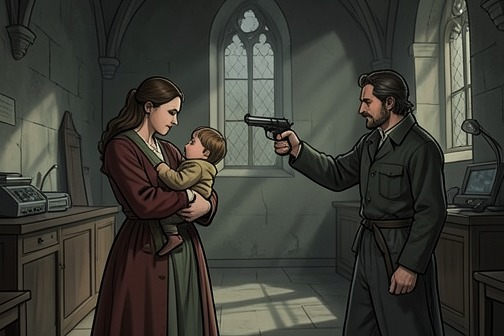
The final confrontation at [The chapel in the woods](entity:location-recall-location-the-chapel-in-the-wo-3ed94c0ad214) is the decisive collision between [Sarah Trafford](entity:character-recall-character-sarah-trafford-821a08498ae2)’s effort to protect [Dinah Singleton](entity:character-recall-character-dinah-singleton-3fb6eb701a31) and the men seeking to control or eliminate the people who could expose their secrets. Its immediate danger is personal—[Dinah](entity:character-recall-character-dinah-b8a1923e6610) is in Sarah’s arms, and Sarah is threatened at gunpoint—but the history behind it reaches back to a concealed military experiment and the state’s attempt to erase its survivors.
## Causes and Background
The soldiers’ account begins with an operation presented as a mission against enemy forces. They were driven far into the desert and told that this was no exercise: armed opponents were supposedly waiting, and the soldiers were expected to take them alive. The targets were boy soldiers. The men were told that these children were genuine enemies, but the order to bring them back alive would acquire a different meaning when the soldiers discovered what the operation really was.
The blast was not an ordinary bomb. Downey explained that the men had been taken there to be tested and exposed: they were guinea pigs. He remembered a sound like breaking glass, an air that seemed to turn muzzy, and pain that continued instead of killing him quickly. As he and the others screamed, [Tommy Singleton](entity:character-recall-character-tommy-singleton-57d477aea743) tried to stop him looking toward the children. Downey looked anyway and saw that the boy soldiers were not screaming; they were melting. His inability to describe the experience fully, and the remembered command not to look, mark the episode as both a physical ordeal and a trauma carried into the later confrontation.
Afterward, the surviving soldiers were taken to an island off [Scotland](entity:location-recall-location-783abb4abcea)’s West Coast. Their captors presented themselves as men keeping them safe, repeatedly promising that they would go home soon. The promise persisted through what Downey remembered as hundreds of tomorrows. The truth emerged when a guard told Tommy that the soldiers were supposed to have died in a helicopter crash near [Cyprus](entity:location-recall-location-8d3eacb72dda). The official account had already made them dead, although they were alive and being held. Downey understood that the authorities could neither release them without exposing the lie nor simply execute members of the armed forces without political protection; their captivity followed from the same cover-up that concealed the desert experiment.
## The Threat in the Chapel
In the chapel’s cold, empty worship space, Sarah Trafford recognizes the history in [Amos Crane](entity:character-recall-character-amos-crane-eb066a3a7112)’s smile: the man now before her is the same threat she had known under the identity of [Rufus](entity:character-recall-character-rufus-46e67b5a0ca5), and she connects that disguise with [Axel Crane](entity:character-recall-character-axel-crane-25af318ec048). The distance Sarah has travelled to reach this scene seems to fold back on itself; the confrontation echoes the danger that began in her kitchen, making the chapel not an escape from the past but its return.
The standoff turns on who can reach a weapon and who is exposed. [Zoë Boehm](entity:character-recall-character-zo-boehm-d0e8e2140692) dips for her gun, only to find it already in Amos Crane’s hand. As [Michael Downey](entity:character-recall-character-michael-downey-0fa523b266d3) reaches for his own weapon, [Zoë](entity:character-recall-character-zo-4329e1cc1b09)’s little pistol is pressed against Sarah’s ear. Sarah keeps hold of Dinah Singleton, who twists in her arms, and does not let the threat make her drop the child. Amos threatens to shoot Sarah, but Zoë tells him the weapon is not loaded. Amos pulls the trigger, testing the warning and briefly suspending the scene between an apparent execution and the possibility that the threat has no force.
## Reversal and Aftermath
Amos Crane’s attention shifts when he tells Zoë Boehm that he has dreamed about her. The admission is strange, but its practical effect is immediate: as his eyes flicker, Amos drops toward the floor and reaches for a gun. He is still intent on killing Zoë and making Michael Downey suffer for his brother’s death, yet Zoë does not hesitate. She shoots, and Amos ceases to be a threat. The moment reverses the balance of the confrontation: the man who had seemed to control the room is stopped by the woman whose attention he has briefly drawn away.
The gunshot carries beyond the chapel. [Howard](entity:character-recall-character-howard-b9b5ae3ec646), approaching through the trees, hears it and reaches a clearing where Sarah Trafford is waiting with a shotgun. He has his own gun, but it hangs from his wrist; the scene has already begun to slip beyond the controlled operation he had expected. When he fires, Sarah is momentarily overwhelmed by the noise and a rushing flash of color. Then she draws a deep breath and recognizes that she is still alive.
The man on the ground has lost the greater part of his right arm, and the shotgun lies twisted at his feet. His face, stripped of its bland disguise by pain, appears to Sarah as the darkness beneath it made visible. The violence does not offer a clean victory: Sarah can find no words, while Howard is left gravely wounded and the chapel’s struggle has spilled into the surrounding woods. But the immediate threat to Sarah and Dinah Singleton has been broken, and the final exchange turns survival from a possibility held at gunpoint into a fact Sarah can recognize for herself.
## The Motive Behind the Search
Downey’s account of Tommy Singleton complicates the image of the men the final confrontation is meant to protect. Tommy had been a soldier and, in Downey’s judgment, a good one, but not a kind man: he went with prostitutes, picked fights, and sometimes struck an opponent from behind. Downey described having to pull him off a man he was beating, recognizing that stopping him sooner might have meant killing him. This portrait resists turning the survivors into uncomplicated victims; the violence done to them and the violence they themselves could do remain part of the same history.
The immediate reason Downey is searching for Dinah is also more complicated than a simple bond between the two. When Sarah asks whether Tommy is the reason, Downey says it is [Maddy Singleton](entity:character-recall-character-maddy-singleton-8b9fd5335c1c). That distinction places Dinah’s peril within the surviving ties to Maddy, and gives the struggle around the child a personal history beyond the armed standoff in the chapel.